The Marble Collapse: Inside the Explosive Congressional Standoff Over the Epstein Archives
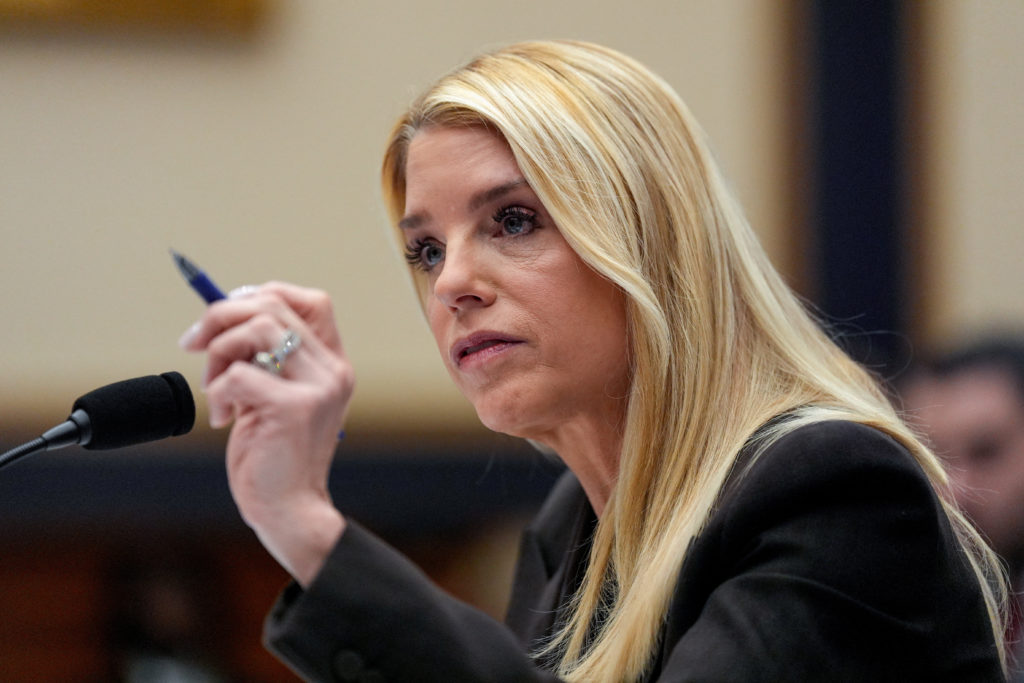
WASHINGTON — In the high-stakes arena of the House Oversight Committee, the air usually hums with the dry cadence of legal procedure. But on Tuesday, that composure was shattered. What was intended to be a routine oversight hearing transformed into a visceral, high-decibel confrontation that laid bare the deepening rot of public distrust in the Department of Justice.
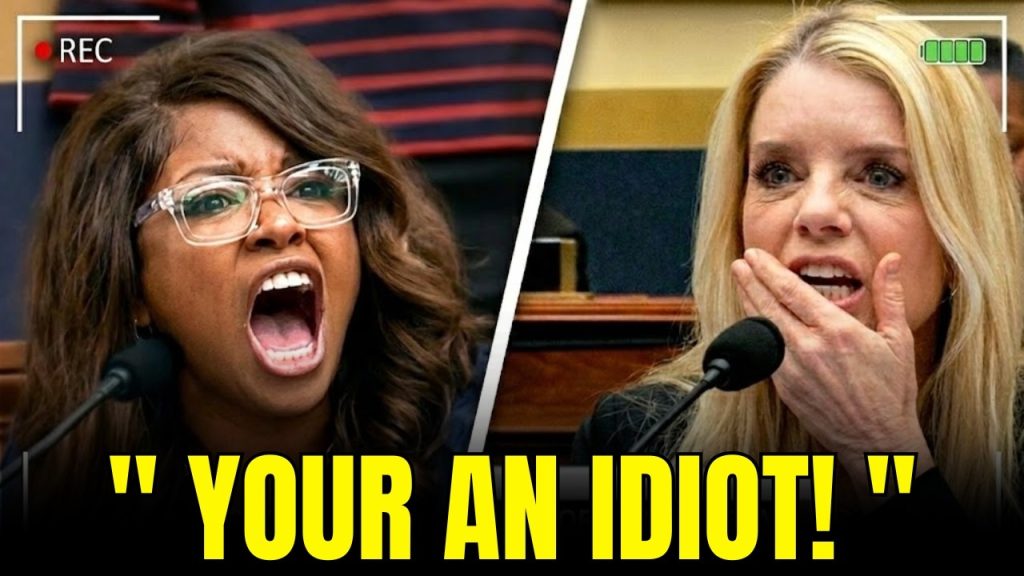
At the center of the storm was Representative Jasmine Crockett, whose refusal to engage in traditional questioning of Attorney General Pam Bondi signaled a radical shift in congressional tactics. Rather than seeking answers she believed would never be provided, Crockett utilized her time to deliver a scathing indictment of what she characterized as a systemic cover-up within the 2026 Epstein file disclosures.
The “Right vs. Wrong” Litmus Test
The hearing took an unconventional turn when Crockett bypassed the witness entirely, instead directing a series of rapid-fire “moral clarity” questions to her colleague, Representative Becca Balint. By asking for simple “right or wrong” verdicts on child rape and presidential self-enrichment, Crockett framed the subsequent silence from the witness table as a catastrophic failure of institutional integrity.
“Our witness somehow is a lawyer but does not understand how it works with witnesses,” Crockett remarked, her voice rising to meet the tension in the room. The congresswoman’s strategy was surgical: by reducing the complex legalities of the Epstein case to a binary of basic morality, she positioned the Department of Justice’s procedural deflections as a form of complicity.
The 38,000 References
The most combustible moments of the hearing arrived when Crockett entered specific “facts” into the congressional record regarding the 2026 Epstein data dump. She pointed to a staggering 38,000 references to Donald Trump, his associates, and his properties within the 5,000 newly unsealed files.
Crockett read directly from investigative notes, detailing allegations that Maxwell and Epstein had historically facilitated introductions between the former president and young women. “I’m not saying the president is a pedophile,” Crockett stated, “but there is a lot of evidence in these files that suggests he is very close friends with a lot of men who are.” The focus on the volume of documentation, rather than just the lack of criminal convictions, served to highlight the gap between prosecutorial standards and public accountability.

The Pivot and the Pushback
Attorney General Pam Bondi’s response to these explosive claims has become the primary talking point for analysts in the capital. Rather than addressing the specific FBI notes or the volume of Trump-related references, Bondi redirected the conversation toward crimes committed by undocumented immigrants and the political donations of Democratic leaders.
This “pivot” was met with immediate vocal resistance. When Bondi attempted to cite homicide and kidnapping cases in Texas to counter the Epstein-focused questioning, the hearing devolved into a shouting match. Critics argue that this deflection strategy—shifting from elite sex trafficking to border security—is a hallmark of a Department that has prioritized political loyalty over its core mission of neutral justice.
A Credibility Crisis in Real-Time
The confrontation underscores a broader reality facing Washington in 2026: the Epstein case is no longer a legal formality; it is a full-blown credibility crisis. Crockett accused the DOJ of spending more resources arresting “whistleblower” journalists like Don Lemon and Georgia Fort than prosecuting the “creeps” named in the archives.
When an Attorney General appears more energized defending the president than explaining the redaction of high-profile names, the thread of public trust—already frayed—begins to snap. The legal distinction between “no prosecutable evidence” and “no evidence of wrongdoing” is a nuance that the American public, watching through viral clips and live streams, is increasingly unwilling to accept.
The Record Remains
As the hearing adjourned, the documents referenced by Crockett remained part of the public record. While the DOJ continues to maintain that no official “client list” exists, the pressure from lawmakers is building to a fever pitch.
Jasmine Crockett’s closing assertion—that Bondi would be remembered as one of the worst Attorneys General in history—was designed for maximum impact, but the true significance lies in the underlying documents. In a post-2025 landscape where “wild conspiracies” are being verified by unsealed files, the strategy of silence may no longer be sustainable. The Epstein archives continue to shake the highest offices in the country, and as Tuesday’s hearing proved, the walls of the DOJ are no longer thick enough to keep the screaming out.