The Knight’s Dilemma: How Jamie Raskin Used Kash Patel’s Own ‘Fairy Tale’ to Challenge the FBI’s Epstein Silence
WASHINGTON — In the high-stakes theater of the House Judiciary Committee, where bureaucratic language often serves as a shield, Representative Jamie Raskin (D-MD) delivered a forensic strike this week that has fundamentally shifted the timeline of the Jeffrey Epstein investigation. Using a combination of the Director’s own past rhetoric and a surprising literary critique, the former constitutional law professor moved beyond the rhythmic sparring of Washington to confront FBI Director Kash Patel with what he termed a “total inversion of principle.”
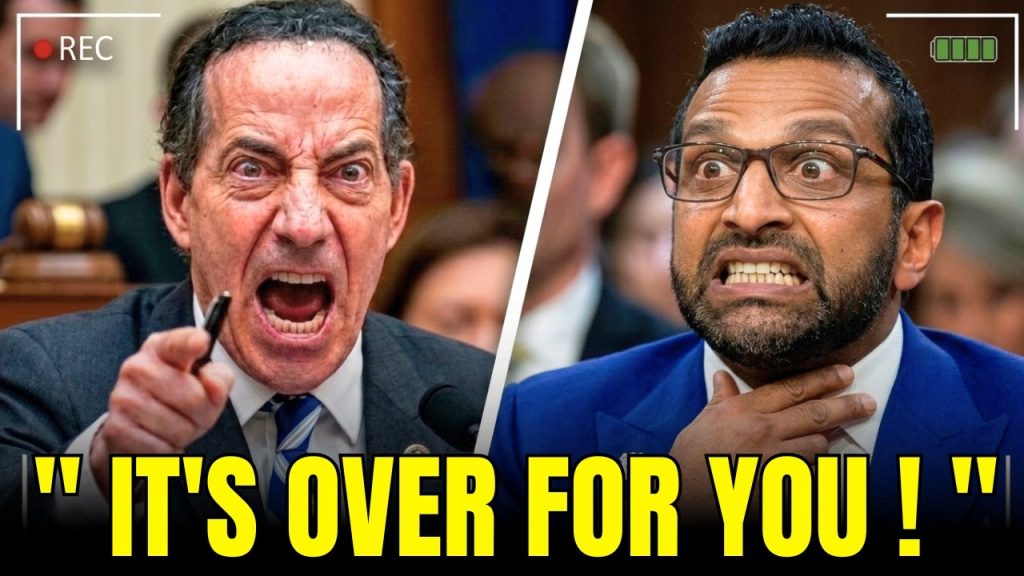
The confrontation, which has since dominated legal and political circles, centered on the stark contradiction between Patel’s 2023 demands for “transparency” and his current institutional posture as the head of the nation’s premier law enforcement agency.
The ‘Big Boy Pants’ Contradiction
Representative Raskin began the interrogation not with a new accusation, but with a playback of Patel’s own words. In a December 2023 interview, prior to his appointment, Patel had challenged the FBI to “put on your big boy pants” and release the Epstein “Black Book,” asserting that the file was under the “direct control of the Director of the FBI.”
“You were sworn in as Director more than 200 days ago,” Raskin noted, his voice carrying the calm weight of a legal brief. “The Black Book is now under your direct control. So, why haven’t you released the names of Epstein’s co-conspirators?”
The strategy was surgical. By establishing that Patel himself had previously defined the Director’s authority as absolute, Raskin bypassed the standard defense of “procedural necessity.” Patel’s response—citing multiple federal court orders and claiming that “everything lawfully permitted” had been released—was met with a sharp factual correction: Raskin pointed out that the material currently being discussed in “dribs and drabs” was a fraction of the evidence seized from Epstein’s properties.
From ‘Cash the Knight’ to ‘Dragon of the DOJ’
The turning point of the hearing occurred when Raskin introduced an unconventional piece of evidence: a children’s book trilogy authored by Patel. In the books, Patel’s literary alter ego, “Cash the Knight,” carries out the vengeance of “King Donald” against enemies like “Hillary Queen Town” and a dragon nicknamed the “DOJ.”
“Your supporters had hoped that you would graduate from imagining yourself a romantic fairy tale knight to actually running America’s premier federal law enforcement agency,” Raskin stated. “Instead, we’ve learned how dangerous it is to name as Director a man who thinks of himself as a wizard carrying out a King’s vengeance.”
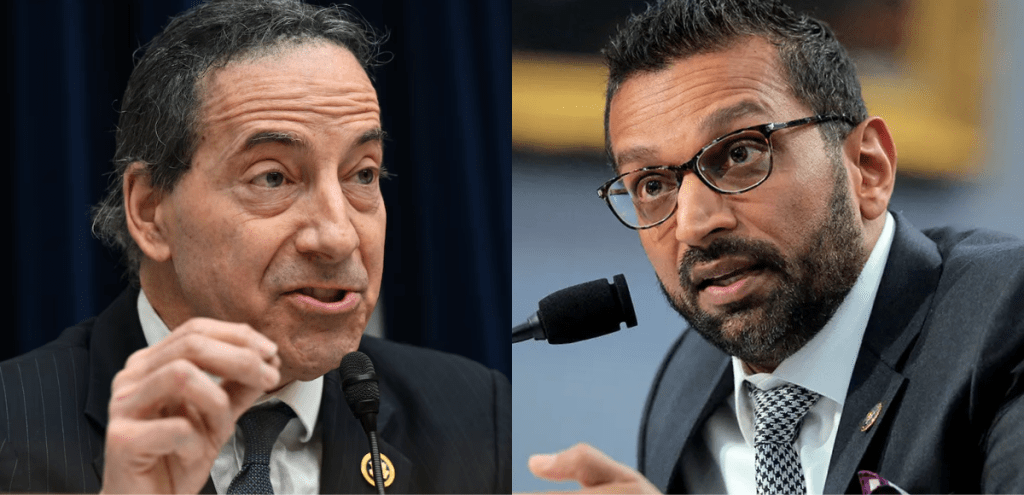
Analysts noted that the most damaging aspect of the exchange was the psychological framing. By highlighting Patel’s self-depiction as a “knight” fighting a “dragon” (the Department of Justice), Raskin argued that Patel had become the very thing he once railed against—an institutional gatekeeper hiding behind the same “court orders” he once characterized as an “evil thing.”
Institutional Fallout and the ‘Zero’ Metric
The tension escalated further as Raskin pressed Patel on the redirection of Bureau resources. While Patel touted a 35% increase in child predator arrests, Raskin focused on the specific handling of the Epstein files. He raised concerns that hundreds of agents had been diverted from counterterrorism and drug trafficking missions to conduct a “selective review” of the Epstein archive—a process Raskin characterized as a search for specific names to protect rather than a search for justice for the victims.
This revelation coincided with reports that the FBI’s posture shifted significantly following a May briefing involving Pam Bondi, after which the Bureau issued a memo stating that “no further disclosure” was appropriate.
The Professional Verdict
The hearing concluded not with a resolution, but with the formal entry of Patel’s past statements into the permanent congressional record. By forcing the nation’s top law enforcement officer to confront his own definition of “evil” in relation to the Epstein cover-up, Raskin has provided a roadmap for future inquiries into witness credibility and institutional transparency.
As the 2026 oversight cycle continues, the “Cash the Knight” exchange stands as a stark reminder of the power of the record. In the halls of Washington, where policy is often debated in the abstract, the presence of a witness’s own contradictory words remains the loudest statement of all. Raskin’s message was clear: a case cannot be closed simply because the “Knight” has reached the castle.
