The Zero Count: How Jerry Nadler’s ‘Indictment Bomb’ Shattered the DOJ’s Defense of the Epstein Files
WASHINGTON — In the high-stakes theater of the House Judiciary Committee, where grandstanding often masks the absence of substance, Representative Jerry Nadler delivered a single, devastating number that has redefined the 2026 oversight cycle. On a Tuesday afternoon thick with tension, the veteran New York Congressman stripped away the procedural jargon surrounding the Jeffrey Epstein archives to ask the nation’s chief law enforcement officer a binary question: “How many of Epstein’s co-conspirators has this Department of Justice indicted?”
The answer, as Nadler pointedly noted before Attorney General Pam Bondi could finish a deflection, was zero.
The Architecture of Avoidance
The “Zero Indictments” bomb was not merely a rhetorical flourish; it was the culmination of a year-long forensic audit of a Department of Justice that many observers now describe as “institutionally paralyzed.” Since taking office in 2025, Bondi has overseen the release of millions of documents under the Jeffrey Epstein Files Transparency Act—a process her department has touted as a landmark in open government.
However, Nadler’s interrogation exposed the hollow core of that transparency. He methodically contrasted the DOJ’s “relentless pursuit” of political rivals with its total stagnation regarding the Epstein s3x-trafficking network. While the department has spent millions attempting to indict local prosecutors and former federal officials, the co-conspirators named in the Epstein files have remained untouched. “You have been the Attorney General for a whole year,” Nadler shouted over the banging of the gavel. “And the answer to my question is zero.”
The Stock Market Pivot
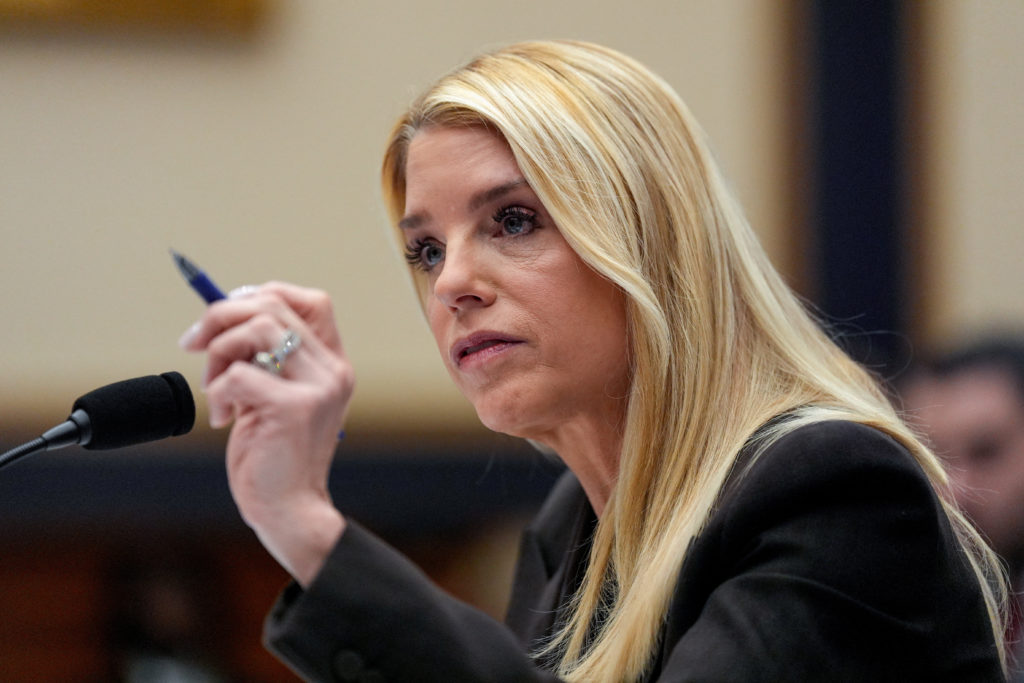
Perhaps the most surreal moment of the 2026 hearings occurred when Bondi was finally given time to respond to Nadler’s accusation. Instead of providing a status update on investigative leads or explaining the lack of grand jury activity, the Attorney General pivoted to economic commentary.
“The Dow right now is over 50,000,” Bondi declared, her voice rising as she listed the performance of the S&P 500 and the NASDAQ as a defense of the administration’s record. The juxtaposition was jarring: eleven Epstein survivors sat in the back of the room, some in white as a symbol of their advocacy, watching as the highest law enforcement official in the land used retirement savings data to answer questions about child s3x trafficking. “What does the Dow have to do with Epstein?” one observer in the gallery was heard to whisper—a question that has since trended across digital platforms.
Selective Redaction and the Victim Privacy Gap
The hearing also highlighted a disturbing pattern in how the Epstein files were managed prior to their release. Nadler and other committee members presented evidence showing that the DOJ’s army of 500 reviewers was remarkably efficient at redacting the names of “uncharged third parties” and high-profile associates, yet “sloppy” and “incompetent” when it came to protecting survivors.
The release of three million pages in early 2026 reportedly included the unredacted names, addresses, and even sensitive photographs of victims who had fought for decades for anonymity. “I don’t know whether this was done out of incompetence or whether it was deliberate and malicious,” Nadler stated, “but either way, it is completely unacceptable.” To critics, it appeared the department was using “privacy” as a shield for the powerful while treating the survivors as collateral damage.
The Special Counsel Precipice
The “Nadler Moment” has accelerated calls for an independent Special Counsel to take over the Epstein file investigation. With 38,000 references to the current president and countless mentions of global elites still being parsed by congressional staff, the conflict of interest within the DOJ has become, in Nadler’s words, “structural.”
By refusing to provide a number of active investigations and instead redirecting to the DOW 50,000 milestone, the Attorney General has fueled the perception that the DOJ has evolved into a “firewall for the powerful.” As the 2026 oversight cycle moves forward, the record now contains a permanent, unaddressed contradiction: an archive full of evidence and a courtroom empty of defendants.
For the eleven survivors who watched the hearing in person, the “Zero” remains the only metric that matters. As Nadler noted before yielding back his time, “The record doesn’t forget, even when the department does.” The files are out, the names are known, but in the wood-paneled rooms of Washington, the search for a single indictment continues.
