Hidden in the Fine Print: Senate Judiciary Erupts Over Epstein Transparency Maneuver
WASHINGTON — What was intended to be a routine procedural vote in the Senate Judiciary Committee devolved into a high-decibel confrontation this week, as Senator Cory Booker (D-NJ) accused his colleagues of using a “shadow amendment” to bury a transparency measure regarding the Jeffrey Epstein investigative files.
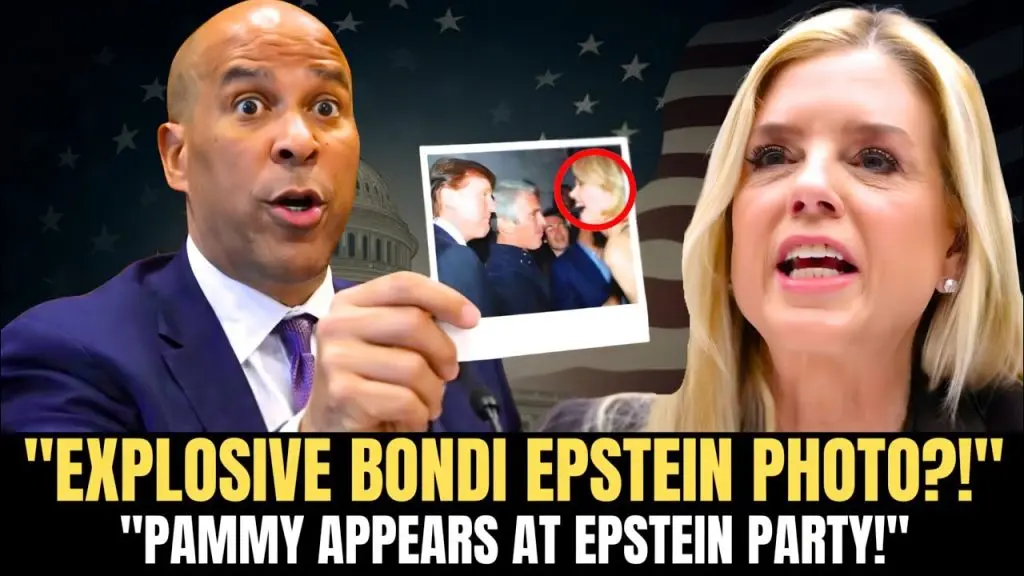
The clash, which pitted Mr. Booker against Senator John Cornyn (R-TX) and the institutional weight of the Department of Justice, highlighted the growing volatility surrounding the millions of pages of evidence currently held by Attorney General Pam Bondi’s department.
The Two-Line Erasure
The firestorm ignited during the final markup of a bipartisan anti-opioid bill. As the committee prepared to move forward, Mr. Booker signaled a “point of order” regarding an amendment introduced by Mr. Cornyn. While the text of the amendment largely focused on immigration policy and the death penalty, Mr. Booker pointed to two lines buried at the very top of the document.
Those two lines did not address border security; instead, they were designed to strike Mr. Booker’s previous amendment—a measure that would have mandated the full disclosure of the Epstein files to the public.
“I’ve never seen this before,” Mr. Booker told the committee, his voice rising. “His first two lines are not to bring up immigration. Your first two lines are to strike my amendment in its entirety. Hidden behind real issues is an attempt to avoid a vote on transparency and accountability.”
“What Are You Afraid Of?”
The room fell into an uneasy silence as Mr. Booker challenged the committee’s motives. He cited public statements from Attorney General Pam Bondi, who reportedly characterized the evidence in the Epstein case as “truckloads,” including potential co-conspirators and international actors.

“If there is that much evidence, why wouldn’t Congress want transparency?” Mr. Booker asked, looking across the dais. “Who are we trying to protect? What are they trying to hide? What are you afraid of?”
The question cut through the procedural fog of the hearing, forcing a direct confrontation over whether the Senate trusts the Department of Justice to self-police its handling of the Epstein files.
A Conflict of Compassion
Senator Cornyn defended the maneuver by pivoting to a broader argument regarding executive authority and unrelated policy goals. He stated his trust in the “Senate-confirmed Attorney General” to make the final determination on what can be safely released without compromising ongoing investigations.
However, the debate took a sharp, personal turn when Mr. Cornyn questioned whether Mr. Booker’s focus on the Epstein case came at the expense of victims of crimes committed by undocumented immigrants. By invoking the names of “Angel Moms” who lost children to violence, Mr. Cornyn attempted to frame the procedural maneuver as a choice between two different types of justice.
Mr. Booker, clearly bristling at the implication, responded by noting his 14-year working relationship with Mr. Cornyn. “To suggest I don’t care about victims of crime is stunning to me,” he said, though he maintained that using “horrific crimes to hide the real intention” of striking transparency was a violation of the committee’s decorum.
The Hostage Legislation
The stalemate placed Chairman Chuck Grassley in a difficult position. The underlying legislation—an anti-opioid bill—is considered a top priority for both parties as drug overdose rates continue to climb. Mr. Grassley warned that the “poison pill” of the Epstein amendment, and the counter-amendments it triggered, threatened to sink the entire bill.
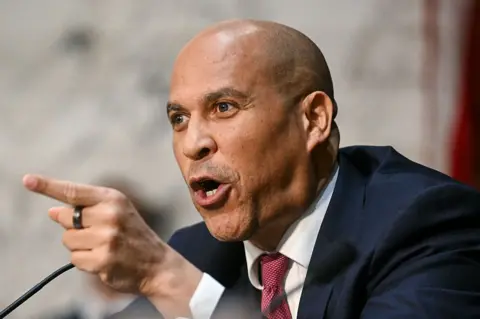
“I see them jeopardizing it in ways even beyond what you said,” Mr. Grassley noted, urging both sides to withdraw their additions to see the life-saving measures enacted.
While Mr. Cornyn offered to withdraw his amendment if Mr. Booker did the same, the New Jersey Senator refused to budge. Mr. Booker linked his defiance not only to the Epstein files but to a separate grievance regarding frozen federal funds for his home state, suggesting that “justice for New Jersey” was also on the line.
An Unresolved Mystery
The committee eventually moved to a roll-call vote, though the confusion on the floor was palpable. “What are we voting on?” one senator asked as the clerk began to call the names.
The procedural outcome—a vote on the second-degree amendment—did little to quiet the underlying tension. Across the political spectrum, from the “patriot” groups mentioned in viral clips to the halls of the Senate, the demand for the Epstein files is no longer a fringe concern.
As the hearing adjourned, the “truckloads of evidence” remained under the lock and key of the DOJ. But for many watching the exchange, the anger in the room suggested that the era of quiet redactions is ending. The fight over who appears in those files, and who is protecting them, has now become a permanent fixture of the American political landscape.
