The Architecture of Secrecy: Inside the Explosive Clash Over the Epstein Files
WASHINGTON — In the modern history of the American legal system, few phrases carry as much weight—or as much potential for fallout—as “evidence of a crime.” On Wednesday, inside the high-stakes theater of the House Judiciary Committee, that phrase became the center of a searing confrontation between Representative Ted Lieu (D-CA) and Attorney General Pam Bondi.
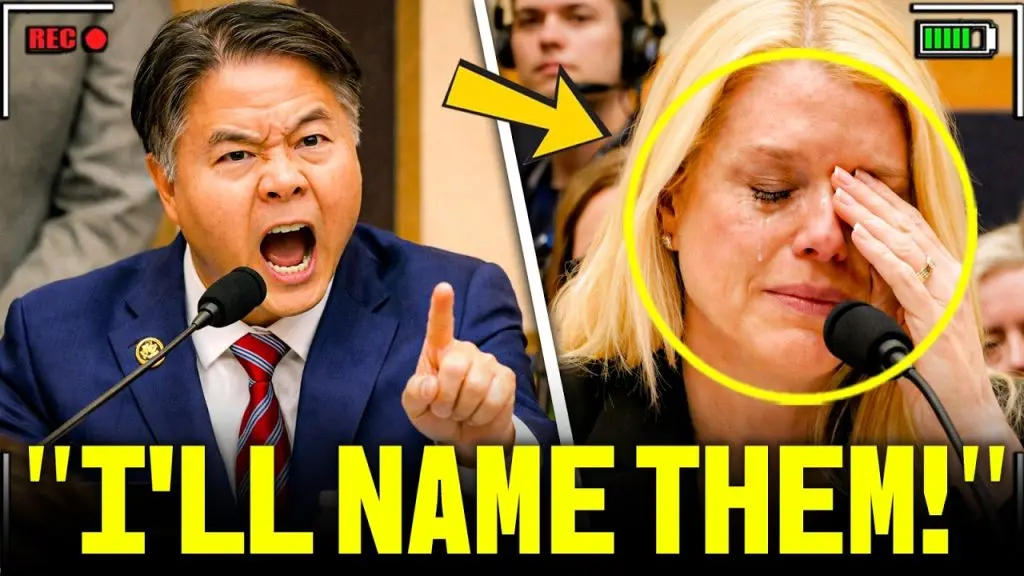
What was intended as a routine oversight hearing into the Department of Justice (DOJ) quickly transformed into a forensic autopsy of the Jeffrey Epstein investigation. At the heart of the dispute was a fundamental disagreement over what constitutes “evidence” and whether the nation’s top law enforcement agency is functioning as a neutral arbiter of justice or a sophisticated shield for the powerful.
The “No Evidence” Assertion
The tension reached a boiling point when Attorney General Bondi stated, under penalty of perjury, that “there is no evidence that Donald Trump has committed a crime” in connection with the Epstein investigation. Characterizing the ongoing inquiry as “ridiculous,” Bondi defended the administration’s record, claiming it has been “the most transparent presidency in history.”
For Mr. Lieu, a former military prosecutor, the assertion was not merely a point of disagreement; it was a “mathematical impossibility.” Citing records recently released under the Epstein Files Transparency Act, Lieu and other committee members pointed to a staggering data point: the President’s name reportedly appears over one million times within the investigative archive.
“You cannot have a million mentions in a criminal file and claim there is nothing to investigate,” Lieu argued. The debate highlighted a growing rift in Washington over the “predicate” for an investigation—the legal threshold of reasonable suspicion required to open a formal inquiry.
The Limo Driver’s Statement
The hearing took a turn toward the specific and the graphic when Mr. Lieu introduced a witness statement from a former limousine driver who had contacted the FBI’s National Threat Operations Center. According to the statement, the witness overheard disturbing conversations between Donald Trump and Jeffrey Epstein and later met a survivor who alleged she had been assaulted by both men.
Lieu pointed out that while the DOJ has possessed this statement for months, there has been no documented interview with the witness under Bondi’s leadership. The Attorney General’s refusal to acknowledge the statement as “predicatory evidence” for an investigation sparked accusations that the Department is intentionally looking the other way.
A Policy of Redaction

The controversy extended beyond what was omitted from the investigation to what was included—and excluded—from public disclosures. A central pillar of the Epstein Files Transparency Act was the mandate to protect survivors while exposing perpetrators. However, the committee presented evidence suggesting a systemic reversal of that priority.
Documents showed that while the names of powerful individuals, such as certain foreign executives with ties to the administration, were initially redacted to “spare them from embarrassment,” the identities of dozens of survivors were exposed. In a move described by critics as “institutionalized cruelty,” the DOJ allegedly published real names, bank information, and even nude images of victims where their faces were clearly visible.
“A low error rate is a meaningless metric when a single error destroys a human life,” Lieu noted, responding to Bondi’s defense that the exposure of names was a result of the department processing three million pages under tight deadlines.
The “Fraud on the Court”
The Attorney General’s credibility faced further strain from the third branch of government: the judiciary. Mr. Lieu highlighted recent comments from federal judges who have excoriated the DOJ for being “inexplicably misleading.” Chief Judge Beryl Howell reportedly suggested that the department’s representations in related cases bordered on a “fraud on the court.”
These judicial rebukes, coupled with the high-profile resignations of career prosecutors like Danielle Sassoon and Hagen Scotten, have created a forensic record of institutional failure. The departing officials—many with impeccable non-partisan credentials—have suggested that the department is being compromised by a culture of fealty to the executive branch.
The Procedural Path Forward
As the hearing concluded after five hours of testimony, the “Special Relationship” between the DOJ and the White House appeared significantly more strained than the official communiqués usually suggest. Mr. Lieu and his colleagues have already begun the procedural steps to compel the release of the remaining documents and investigate orders given to scrub specific names from the files.
For the survivors sitting in the gallery, the hearing was a reminder that in the architecture of secrecy, the most potent weapon is often the light of the public record. While the Attorney General remains firm in her “no evidence” stance, the million references, the witness statements, and the judicial findings remain on the table—forming a paper trail that no amount of bureaucratic deflection can easily erase.
