Washington, D.C. — Years after the death of financier Jeffrey Epstein, the documents, records, and unanswered questions surrounding his network continue to generate intense public interest—and, at times, speculation that stretches far beyond what has been confirmed.
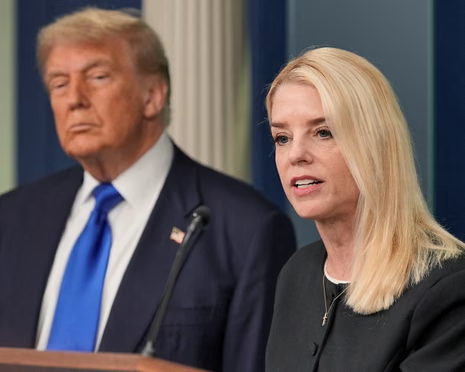
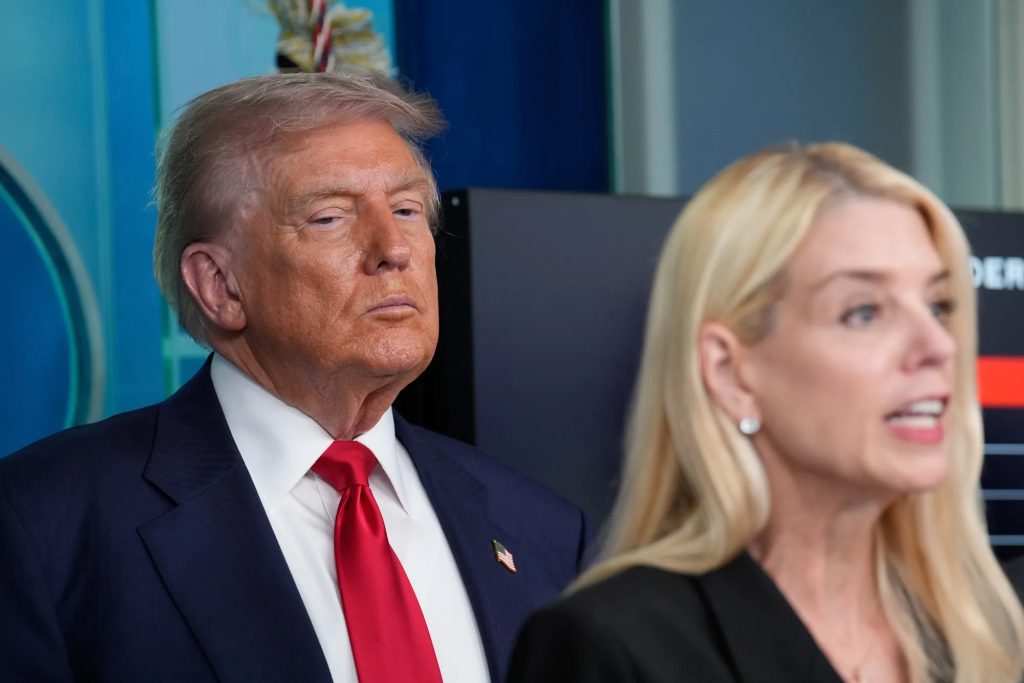
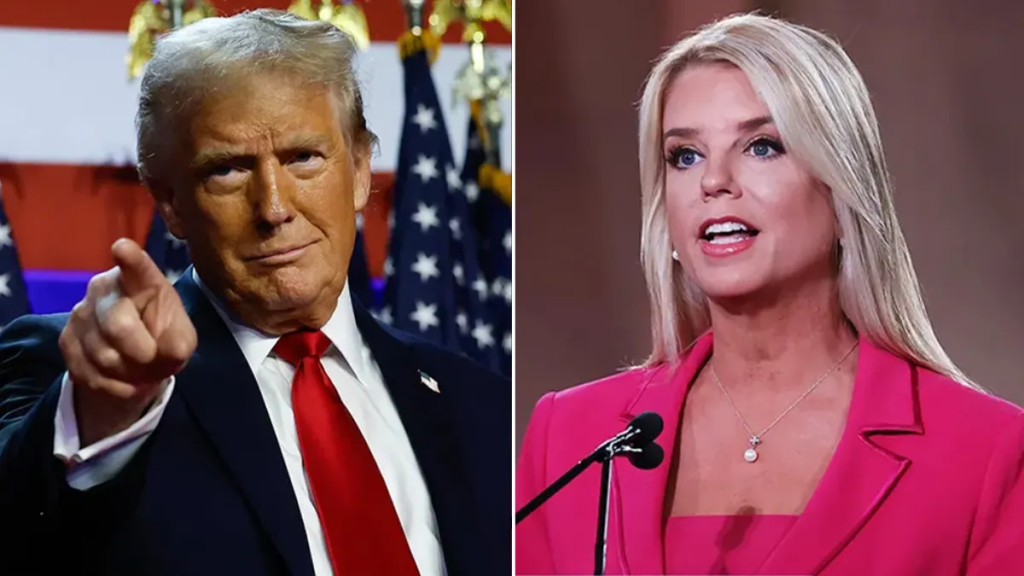
At the center of that ongoing attention are not only the records themselves, but the figures who intersected with Epstein’s world, directly or indirectly. Among those frequently mentioned in public discussions are former Florida Attorney General Pam Bondi and former President Donald Trump.

While no credible evidence supports claims of concealed “inner circle” files in the way some headlines suggest, the persistence of these narratives reveals something deeper: a widespread demand for clarity about how Epstein operated—and how his network extended into powerful spaces.
The Enduring Impact of the Epstein Case
Jeffrey Epstein’s criminal activities, which involved the trafficking and abuse of underage girls, shocked the world and exposed failures across multiple systems—legal, financial, and social.
Even after his death in federal custody in 2019, the case has remained a focal point of investigation and public scrutiny.
Why?
Because the scope of Epstein’s connections raised fundamental questions:
- Who knew what—and when?
- How was his operation allowed to continue for so long?
- What role, if any, did powerful associates play?
These questions continue to drive interest in any document, record, or testimony linked to him.
What Are the “Epstein Files”?
The term “Epstein files” is often used broadly—and sometimes inaccurately.
In reality, it refers to a collection of materials gathered through:
- Law enforcement investigations
- Court filings and civil lawsuits
- Financial records
- Personal contacts and communications
These documents have been released in phases over time, often through court proceedings or investigative reporting.
Importantly, the presence of a name in these records does not, on its own, indicate wrongdoing.
Legal experts consistently stress this point.
Pam Bondi’s Role: What Is Known
Pam Bondi served as Florida’s Attorney General during a period when Epstein’s earlier legal case remained a subject of public debate.
Critics have questioned aspects of how Epstein’s case was handled at the time, particularly the controversial plea agreement reached in 2008.
Supporters of Bondi argue that the agreement was negotiated at the federal level and that her office operated within its jurisdiction.
Over the years, journalists and watchdog groups have examined public records, timelines, and political donations in an effort to understand the broader context.
These discussions are based on documented events—not hidden files.
Donald Trump and Epstein: Documented Intersections
Donald Trump’s name has also appeared in discussions about Epstein, primarily due to social and business interactions that took place decades ago.
Publicly available information shows that the two were acquainted in the 1990s and early 2000s.
Trump has stated in interviews that he later distanced himself from Epstein.
Investigations and reporting have examined these connections, but no court has found Trump criminally liable in relation to Epstein’s activities.
As with many figures who appear in Epstein-related documents, context matters.
The Power of the “Hidden Files” Narrative
So why do headlines about “hidden truths” and “secret files” continue to circulate?
Part of the answer lies in the nature of the case itself.
Epstein’s world involved wealth, influence, and secrecy.
That combination naturally fuels speculation.
When official information is incomplete—or released gradually—it creates space for narratives to fill the gaps.
In today’s media environment, those narratives can spread rapidly.
How Information Becomes Distorted
The process often follows a familiar pattern:
- A real document or event is referenced
- Details are simplified or taken out of context
- Additional claims are layered on without verification
- The story is framed as a major “exposé”
By the time it reaches a wide audience, the line between confirmed fact and speculation can become blurred.
This is particularly true in cases involving complex legal records.
What Investigators Actually Focus On
For investigators, the focus is not on dramatic narratives—but on evidence.
That includes:
- Verified communications
- Financial transactions
- Witness testimony
- Documented timelines
Each piece is evaluated within a legal framework.
Speculation, no matter how widespread, does not carry weight in court without supporting evidence.
Public Frustration and Demand for Answers
The persistence of these stories also reflects genuine frustration.
Many people feel that the full scope of Epstein’s network has never been fully explained.
They want transparency.
They want accountability.
And when answers seem incomplete, they look elsewhere—sometimes toward unverified claims.
This dynamic is not unique to the Epstein case, but it is particularly strong here due to the scale and severity of the crimes involved.
Media Responsibility in High-Profile Cases
For journalists and media organizations, cases like this present a challenge.
On one hand, there is a clear public interest in understanding what happened.
On the other, there is a responsibility to avoid amplifying claims that are not supported by evidence.
Responsible reporting focuses on what can be confirmed.
It distinguishes between:
- Documented facts
- Ongoing investigations
- Speculation
Maintaining that distinction is critical.
The Legal Reality
From a legal perspective, allegations must meet a high standard of proof.
Courts require evidence that is:
- Verifiable
- Relevant
- Admissible
Without that, claims remain unproven.
This is why many sensational narratives do not translate into legal outcomes.
Why the Story Isn’t Over
Despite years of investigation, the Epstein case continues to evolve.
Civil lawsuits remain active.
Documents are still being released.
New details occasionally emerge.
Each development renews public attention—and, with it, new interpretations.
Separating Fact from Narrative
For readers and observers, the key challenge is distinguishing between:
- What is known
- What is unknown
- What is being claimed without evidence
This requires critical thinking and careful attention to sources.
In an era of rapid information flow, that is not always easy.
The Bottom Line
There is no verified evidence that Pam Bondi is concealing specific Epstein-related files about Donald Trump or any alleged “private inner circle” in the way the headline suggests.
What does exist is a complex, ongoing story—one that continues to raise important questions about power, accountability, and transparency.
But those questions must be answered through evidence, not assumption.
The Last Word
The Epstein case remains one of the most troubling and consequential scandals in recent history.
Its impact extends far beyond any single individual.
And while the search for answers continues, the difference between confirmed fact and speculation remains essential.
Because in cases like this, clarity matters.
And truth—however complex—is always more important than the headline.
