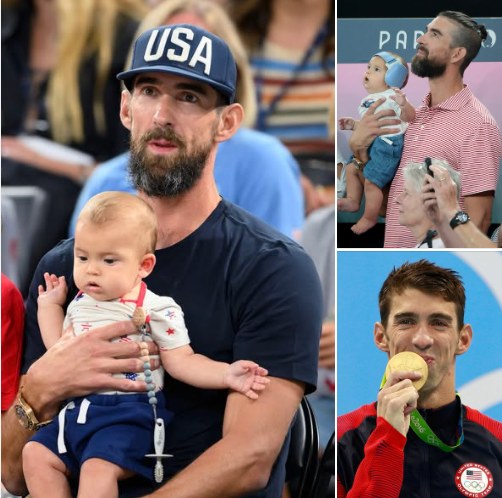
Michael Phelps is widely recognized as one of the most accomplished Olympians in history. With 28 Olympic medals, including 23 golds, his record in competitive swimming stands apart—built not only on talent, but on years of discipline, repetition, and quiet endurance.
A Career Shaped by Consistency
Born in Baltimore in 1985, Phelps entered the water early and stayed with it long enough to transform potential into mastery. His dominance at the Olympic Games did not come from a single breakthrough moment, but from sustained effort over time—races won, losses processed, limits tested again and again.
Many great names exist in Olympic history—athletes who defined their eras and carried the weight of expectation. Yet in terms of total gold medals, Phelps occupies a space that remains unmatched.
Records can impress, but what they often reflect is something less visible: the willingness to return each day to the same work, even when the excitement has passed.
Recognition Beyond Performance
Over time, admiration for Phelps has extended beyond the pool. Fans often describe him as an icon, but what draws lasting respect is not only what he achieved, but how openly he has spoken about what came with it.
Success, in his case, did not remove struggle. It existed alongside it.
A Partnership That Held Through Difficulty
Phelps is married to Nicole Johnson, a former Miss California USA. While her early recognition came through pageantry, her role in his life has been less about titles and more about steadiness.
They met at the ESPY Awards, but their relationship deepened away from public stages—particularly during periods when Phelps faced anxiety and depression.
Support, in such moments, is not loud or performative. It is patient. It stays when things are unclear. By his own account, she offered that kind of presence.
Since 2015, she has also been involved in the Michael Phelps Foundation, contributing to efforts around water safety, health, and well-being—work that reflects a shift from achievement toward responsibility.
A Different Kind of Legacy
Together, they are raising four sons. Family life rarely carries the same visibility as Olympic finals, but it asks for a different kind of consistency—the kind that cannot be measured in medals.
Phelps’ story, seen from a distance, is one of dominance and record-breaking success. Seen more closely, it includes something quieter: learning how to carry success without being defined only by it, and how to rebuild parts of life that achievement alone cannot steady.
What Endures
In the end, his legacy is not only in numbers.
It is in the example of what sustained effort can produce, and also in the willingness to speak honestly about what effort costs. It is in the shift from individual pursuit to shared responsibility—toward family, toward community, toward something beyond personal victory.
Greatness can draw attention.
But what remains, over time, is how a person lives with it.
