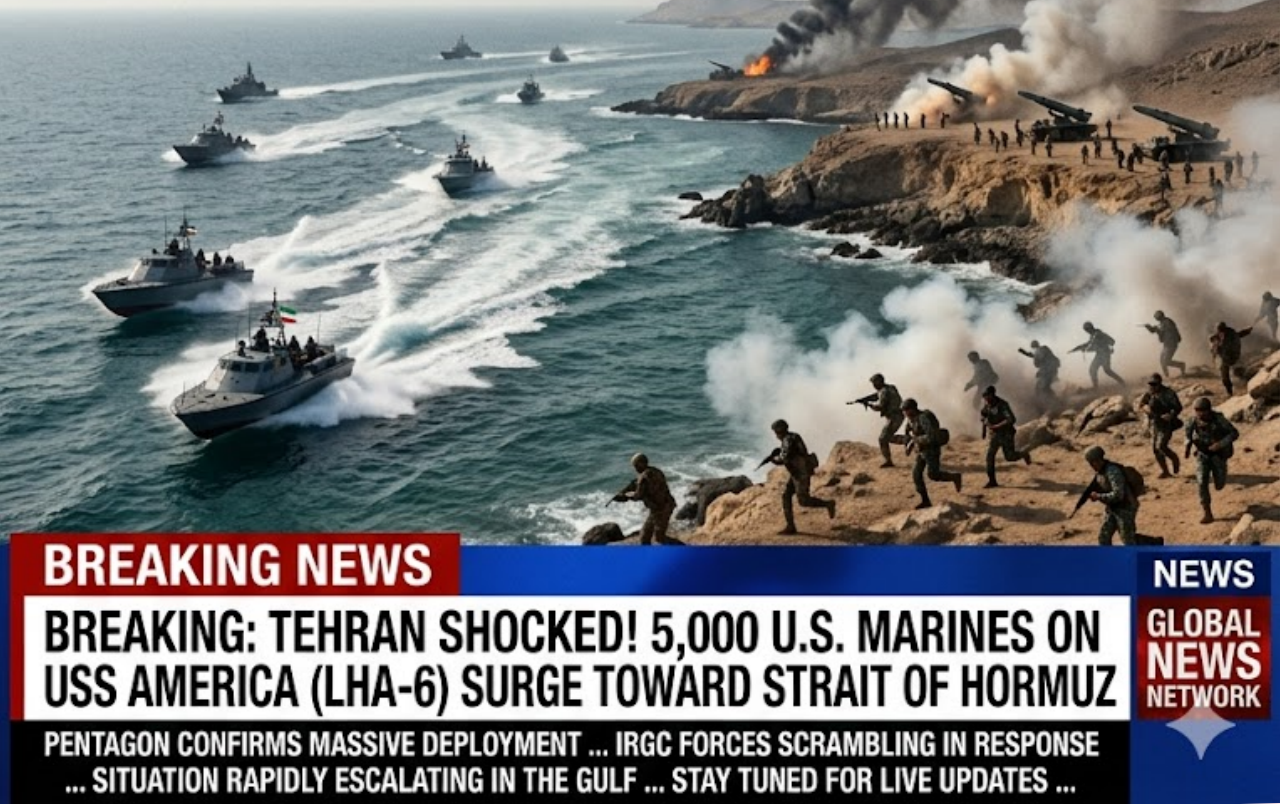
The geopolitical tension in the 2026 conflict with Iran has escalated sharply, with major U.S. military assets being repositioned toward the strategic Strait of Hormuz amid concerns over Iran’s attempts to disrupt global energy flows. Recent defense movements have reportedly included thousands of U.S. Marines on amphibious assault ships, signaling a significant uptick in battlefield readiness and deterrence efforts.
According to confirmed reports, the U.S. has expanded its maritime and ground‑capable presence in the Persian Gulf, deploying roughly 5,000 Marines and sailors aboard amphibious assault ships as part of a larger operational surge. This hefty force boost includes Marines typically organized into Marine Expeditionary Units (MEUs) — expeditionary formations designed for rapid deployment, crisis response, and, if ordered, forcible entry missions.
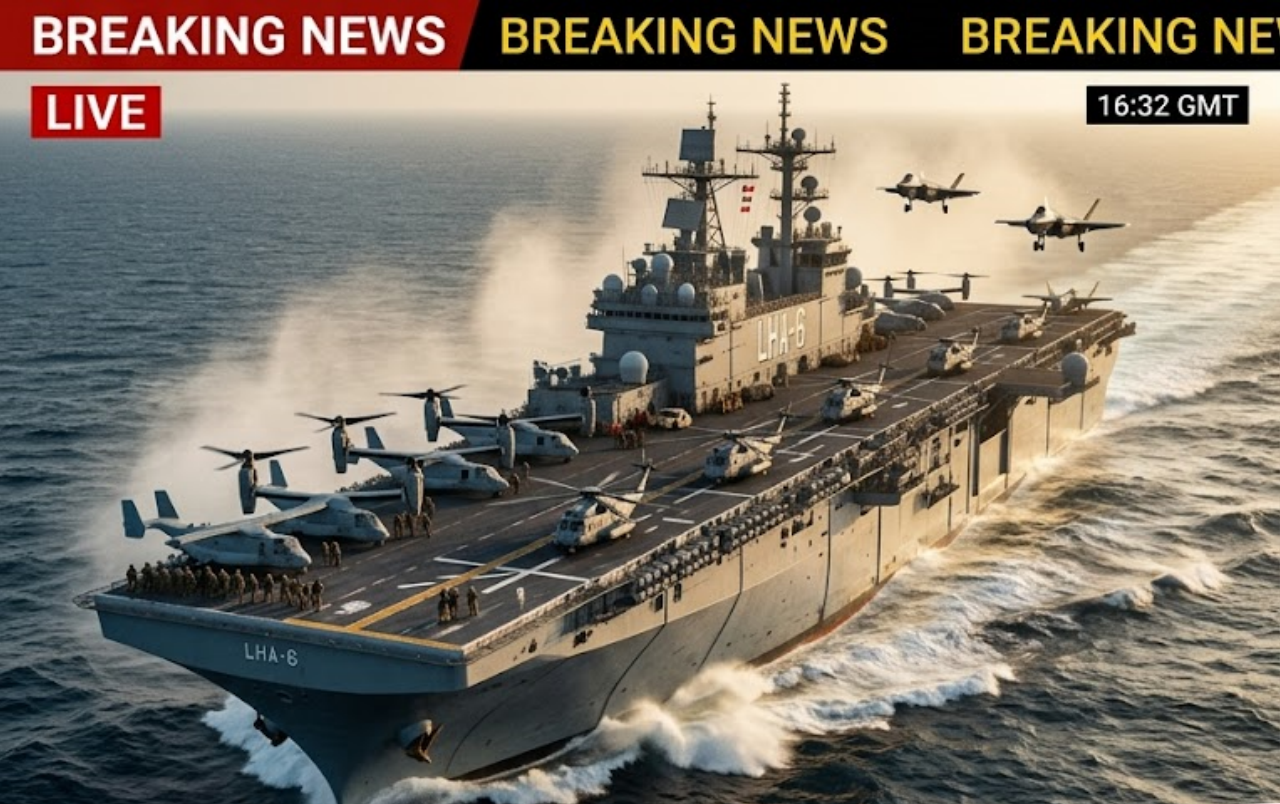
One of the principal platforms involved in this naval repositioning is the USS America (LHA‑6), an America‑class amphibious assault ship capable of transporting Marine ground forces, aviation assets like F‑35Bs and MV‑22 Ospreys, and attack helicopters into combat scenarios. These ships serve as mobile sea bases from which the Marine Corps can project power ashore or support broader naval and air operations.
The reported surge toward the Strait of Hormuz area is directly linked to the ongoing closure and contestation of this vital waterway after Iranian threats and military actions have effectively disrupted normal shipping traffic. Roughly 20 % of the world’s oil flows through this narrow chokepoint, making control — or even contested control — of the strait a major concern for global markets and allied energy security.
The arrival of Marine Expeditionary Units and their amphibious platforms represents a strategic escalation beyond air and naval strikes: it transforms U.S. posture from purely defensive to potentially offensive or deterrent operations. Marine units are uniquely equipped to perform amphibious landings, island seizures, and rapid ground insertions, which analysts say may be intended to protect or secure key islands near the strait or to pressure Iran’s control of key terrain.
It’s worth noting that while the USS America itself has a maximum Marine capacity of roughly 1,700 troops under normal operations, amphibious ready groups can be configured to surge additional personnel depending on mission needs — which is how combined formations can carry several thousand Marines aboard a flotilla of amphibious ships.
Strategically, this buildup is being framed by U.S. defense planners as both a show of force and a practical preparation for a range of contingencies, from securing shipping lanes to potentially isolating Iranian coastal defenses and expeditionary nodes. However, Tehran has openly expressed defiance, warning that any attempt to seize territory or impose outside control over the Hormuz region will be met with severe retaliation.
With energy markets already sensitive to supply disruptions and geopolitical risk premiums rising, the deployment of Marine forces aboard amphibious assault ships like the America underscores how the conflict around the Strait of Hormuz has moved beyond sea and air engagements into a broader phase of potential ground operations — even if a full amphibious assault has not been publicly authorized.
In short, the surge of U.S. Marines toward Hormuz highlights Washington’s intent to pressure Iran and protect global interests — a development that experts warn could further escalate an already volatile regional conflict.
