
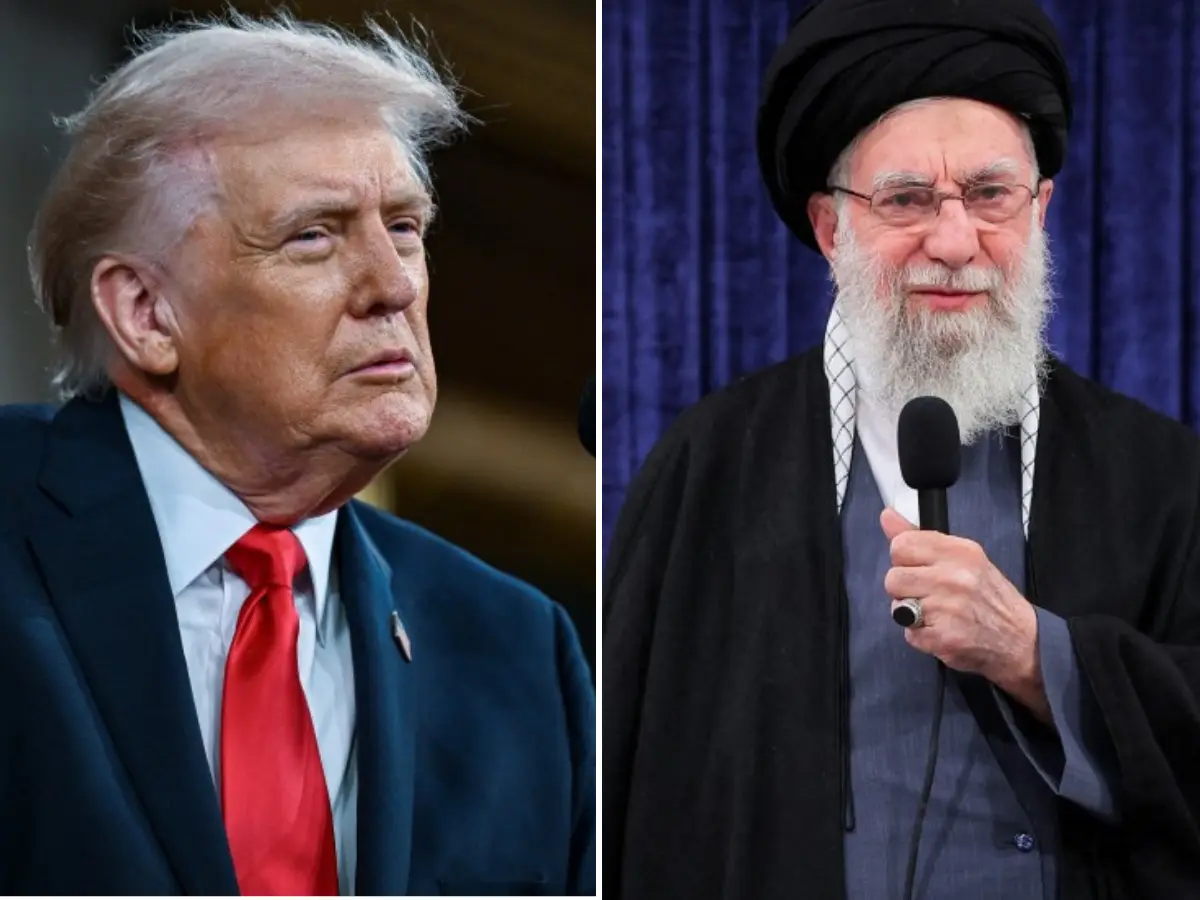
In one of the most shocking developments in global geopolitics, Iran’s Supreme Leader Ayatollah Ali Khamenei has been killed in a targeted U.S.-Israeli military operation. The strike, which also claimed the lives of over 40 high-ranking Iranian officials, marks a pivotal moment in the long-standing tensions between the United States, Israel, and the Islamic Republic of Iran. With a history of nuclear threats, regional instability, and persistent ideological clashes, the loss of Khamenei could have profound implications on the Middle East and the world stage.
The Operation: What Happened?
On February 28, 2026, a joint operation launched by the United States and Israel resulted in the targeted elimination of Ayatollah Ali Khamenei, along with several of Iran’s top military and political leaders. This marks a significant escalation in the years-long standoff between Iran and Western powers, especially in light of the Supreme Leader’s critical role in shaping the country’s domestic and foreign policies.
According to U.S. and Israeli sources, the operation involved precise missile strikes and other advanced weaponry aimed at critical Iranian military infrastructure, including the Islamic Revolutionary Guard Corps (IRGC) command centers, government buildings, and key figures in the government.
The early reports indicate that Khamenei was at a secure location in Tehran when the operation began. As the missiles struck their targets, the Supreme Leader and many of his inner circle were confirmed dead within hours. By the time the operation was completed, an estimated 40 individuals, including high-ranking military commanders and political elites, had perished in the attack. This sudden removal of key figures has left Iran in a state of deep shock and confusion.

The Strategic Significance of Khamenei’s Death
Ayatollah Ali Khamenei, who had led Iran since 1989, was the highest authority in the country, wielding immense power over the government, military, and religious institutions. His death represents the loss of a symbol of Iran’s ideological and strategic direction. His leadership marked an era of resistance to Western powers, which included pursuing nuclear technology, supporting proxy groups throughout the Middle East, and engaging in hostile rhetoric toward the U.S. and Israel.
Khamenei’s policies reshaped the region, making Iran one of the most influential players in the Middle East. His death leaves a massive leadership void, with no clear successor in sight. This power vacuum has sent tremors through the region, and it’s expected to trigger fierce competition for control within the Iranian political and military spheres.
The Key Players
U.S. President Donald Trump’s Role
While much of the operational planning and intelligence gathering was conducted by Israel, U.S. President Donald Trump has been closely involved in the decision-making process, especially considering his administration’s longstanding policy toward Iran. Since taking office, Trump has sought to isolate Iran diplomatically and has frequently expressed his desire to prevent Tehran from obtaining nuclear weapons. This operation is a culmination of his aggressive “maximum pressure” campaign against the regime.
Trump has publicly stated that Khamenei’s death will “serve as a message” to countries like Iran who challenge U.S. influence. The president has emphasized that the elimination of Khamenei was necessary for national security and that the U.S. will continue to act in its interests without hesitation. His office has been in close contact with Israeli Prime Minister Benjamin Netanyahu, and together, they have coordinated their efforts to target key figures in Iran’s leadership.

Israel’s Role in the Operation
Israel has been Iran’s chief adversary in the region, especially due to Iran’s support for groups like Hezbollah and its stated goal of eliminating Israel as a state. The Israeli military’s expertise in intelligence gathering, precision strikes, and covert operations has been crucial in carrying out this high-risk mission.
Israel has long feared Iran’s growing influence in the region, particularly the Islamic Republic’s advancements in nuclear technology and its alliances with armed militias. With Khamenei’s support for these initiatives, Israel has positioned itself as a key opponent to Iran’s regime. The Israeli government has already indicated that it sees Khamenei’s death as a critical blow to the Iranian regime’s destabilizing activities in the region.
Reactions and Implications
Iran’s Reaction: Retaliation and Uncertainty
The death of Khamenei has rocked Iran to its core. The Islamic Republic’s Supreme Leader was not just a political figure but a revered religious authority. The ensuing shockwaves were immediate. State-run television stations in Iran quickly broadcast the news of Khamenei’s death, with national mourning declared immediately.
Iranian officials have vowed to retaliate against the U.S. and Israel, promising a “harsh response” to the killing of their leader. The Iranian government, led by President Ebrahim Raisi, has called for national unity and vowed to “avenge this barbaric act.” Military experts speculate that Iran could retaliate with missile strikes on U.S. bases in the Middle East, attacks on Israeli assets, or proxy operations against Israel and its allies.
The leadership vacuum left by Khamenei’s death could trigger infighting within Iran’s clerical establishment as different factions vie for control. In the absence of a clear successor, both hardliners and moderates are expected to attempt to secure power, with many fearing that this could lead to even more extreme policies.
Global Reactions: Mixed Feelings of Caution and Celebration
The international community’s reaction to Khamenei’s death has been divided.
Western Powers: Support for the Action
The United States and Israel have celebrated Khamenei’s death, calling it a strategic victory in the ongoing battle for regional supremacy. Western allies, especially European countries, have been cautious, acknowledging the precision of the operation but also warning about the potential consequences of such a dramatic shift in Iran’s leadership.
Trump and Netanyahu have both made public statements lauding the operation as a necessary step in eliminating a destabilizing figure. However, there have been concerns about the potential for increased violence in the region, with analysts speculating that Khamenei’s death could provoke Iran into escalating its military activities.
Russia and China: Strong Opposition
On the other side, Russia and China — both of which have been diplomatic allies of Iran — have condemned the operation as a violation of Iran’s sovereignty and a dangerous escalation of tensions. Both countries have called for restraint and warned that the operation could lead to a wider conflict.
In particular, Russia has expressed deep concerns about the destabilizing effects that Khamenei’s death could have on the region and the broader global order. Moscow has called for immediate diplomatic discussions and for the parties involved to work toward de-escalation.
Arab Nations: Fear of Repercussions
Arab nations, particularly those in the Gulf Cooperation Council (GCC), are observing the events with mixed feelings. While many of these nations have long viewed Iran as a regional rival, the sudden instability created by Khamenei’s death poses a risk to their own security. These nations are likely to increase their military preparedness as they brace for potential Iranian retaliation.

Geopolitical Fallout: The Middle East on Edge
Power Vacuum in Iran: Who Will Lead Next?
With Khamenei’s death, Iran faces an uncertain future. Iran has been led by the clerical establishment for decades, but the lack of a clear successor raises critical questions. Iran’s system of governance, which is based on the leadership of a Supreme Leader, may now be put to the test.
Potential successors include figures like Mohammad Javad Zarif, former foreign minister, and Ebrahim Raisi, the current president. However, both figures face challenges in uniting the divided factions within Iran’s ruling elite.
The Islamic Revolutionary Guard Corps (IRGC), which has been a central pillar of the regime’s power, may seek to assert more control, potentially leading to a military dictatorship or a hardline clerical government.
Impact on Regional Alliances
Iran has long supported proxy groups across the Middle East, including Hezbollah, Hamas, and various factions in Iraq, Syria, and Yemen. The death of Khamenei could potentially lead to instability in these regions, where Iranian-backed forces may feel more emboldened to take direct action.
On the flip side, this event may offer opportunities for peace. Some analysts believe that the removal of such a polarizing figure could create space for moderate forces within Iran to emerge, potentially leading to diplomatic breakthroughs with the West and Arab nations.
Conclusion: A Turning Point for Iran and the Middle East
The death of Ayatollah Ali Khamenei is a defining moment in the history of Iran and the broader Middle East. Whether this marks the beginning of a new era of stability or the onset of a deeper, more protracted conflict remains to be seen.
In the short term, Iran is expected to retaliate, and the region could face increased military tensions. However, the long-term implications could be even more profound. A change in Iran’s leadership could create new opportunities for dialogue, though it will also present significant challenges in terms of managing the fallout from Khamenei’s death.
As the world watches, the next steps taken by Iran, the U.S., Israel, and their allies will determine the future of the Middle East. The question remains: can peace emerge from this moment of profound loss and chaos, or will it only sow the seeds for further violence and division?
