Simon Cowell’s rise from an unfocused young man drifting through the music industry to one of the most recognizable forces in global entertainment is a story built on blunt honesty, relentless ambition, and a career defined by sharp instincts. The polished version most people know now—Cowell the multimillionaire judge, the talent-spotter, the man who built empires out of televised auditions—was shaped by years of failure, reinvention, and a late-in-life shift into fatherhood that changed him more than fame ever did.
Cowell didn’t begin with glamour. He started out as a restless teenager who dropped out of school and stumbled into EMI Records through his father’s connections. The work wasn’t glamorous; it was administrative, tedious, and far from the spotlight. But it placed him close to the one thing that always pulled him in: talent. His job was simple—listen, evaluate, and decide who might have a future. That skill, the ability to see potential before anyone else, became the backbone of everything he later built.
His first attempts at running his own label were disasters. Twice he tried. Twice he failed. Both times he returned home, broke and humbled. Later, he admitted those failures were a weird relief—they forced him to stop pretending he had it all figured out. They gave him space to think clearly and restart with intention instead of ego.
Out of that reset came S Records. It wasn’t flashy, but it worked. He signed boy bands like 5ive and Westlife, helped build them into chart-topping acts, and produced a massively successful 1995 cover of “Unchained Melody.” It wasn’t superstardom, but it was solid ground—finally.
Then came the pivot that rewrote his life: television.
When Cowell joined Simon Fuller to launch Pop Idol in 2001, no one predicted the cultural earthquake that followed. Cowell wasn’t just a judge—he became the show’s gravitational pull. He said what others wouldn’t, delivered criticism like a scalpel, and somehow made cruelty feel like clarity. Viewers were stunned, sometimes offended, but they couldn’t look away. The show exploded in popularity, and so did he.
The American version took everything bigger. American Idol turned Cowell into a household name worldwide. His blunt “I’m just being honest” persona became iconic. Whether audiences loved him or loathed him, they listened. They cared. In entertainment, that’s everything.
He didn’t stop there. He created The X Factor, Britain’s Got Talent, and later joined America’s Got Talent, building an empire across continents. His earnings skyrocketed into tens of millions a year. Today, his net worth sits comfortably in the hundreds of millions—a level of wealth that once seemed unthinkable given where he started.
But money wasn’t the only transformation. Cowell also reshaped his appearance, openly embracing cosmetic procedures—from Botox to non-surgical facelifts to famously bizarre treatments like sheep-placenta facials. For a while, each season seemed to debut a slightly altered version of him. Eventually, even he admitted he went too far. His son, Eric, made a simple comment about his face looking strange, and Cowell pulled back completely. Now he sticks to a straightforward skincare routine and lets the rest go.
His health reminded him he wasn’t invincible. In 2017, he fainted due to low blood pressure, and in 2020, he broke his back in a horrific e-bike accident that required a metal rod inserted during surgery. For months, he rebuilt himself—walking miles every day, focusing on strength until he could return to the life he knew.
The biggest shift, though, wasn’t physical. It was emotional.
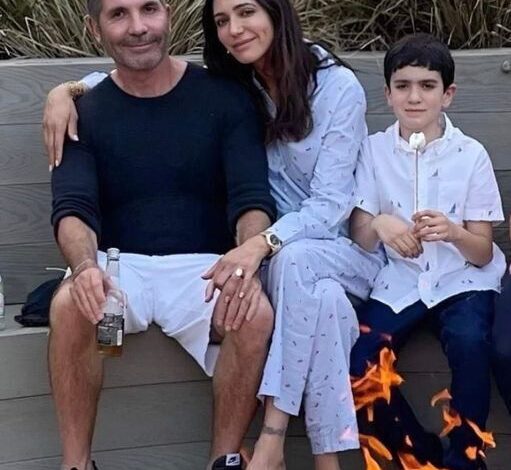
When Eric was born in 2014, Cowell was unprepared. He’d never pictured himself as a father. He was in his fifties, working nonstop, consumed by his shows. Fatherhood wasn’t part of the script. But once it happened, it reoriented everything. He called Eric “the most amazing thing that ever happened” to him—a statement his longtime fans never expected to hear from the notoriously icy judge.
Yet fatherhood didn’t soften his principles about money. Despite his massive fortune, Cowell has been clear that Eric won’t inherit it. Not because he doesn’t love him—but because he believes inherited wealth dulls ambition. Instead, he plans to donate his fortune to charity, arguing that what matters isn’t passing down money, but passing down opportunity and work ethic.
He’s lived that belief. During the pandemic, Cowell donated heavily to food-support charities in the U.S. and the UK, contributing over a million dollars to help people struggling to feed their families. It was a reminder that beneath the sharp remarks and the tailored suits is someone who understands struggle far better than outsiders assume.
Today, Cowell is a blend of all his eras: the ruthless talent scout, the unstoppable television creator, the man who rebuilt himself after injury, and the father trying to guide a son without drowning him in privilege. His decisions—whether professional, cosmetic, or parental—have sparked debates around the world, but that’s the nature of his influence. Cowell doesn’t drift quietly. He leaves marks.
And maybe that’s why his story hits so many people. It’s not just about fame or fortune. It’s about someone who failed publicly, restarted from scratch, reinvented himself, and then reinvented himself again. It’s about a man who made a career out of telling uncomfortable truths, only to discover, late in life, that some truths—about family, responsibility, and legacy—hit harder than anything he’s ever said on camera.
Simon Cowell’s legacy isn’t finished. He’s still shaping shows, still shaping talent, still reshaping himself. But fatherhood has undeniably shifted his priorities, grounding a man who once floated from project to project without pause.
Whether you admire his sharpness or roll your eyes at his ego, one thing’s undeniable: he built one of the most powerful entertainment careers in modern history, then chose to raise his son with intention rather than indulgence. And that choice, more than the money, may end up being the most surprising chapter of his story.
