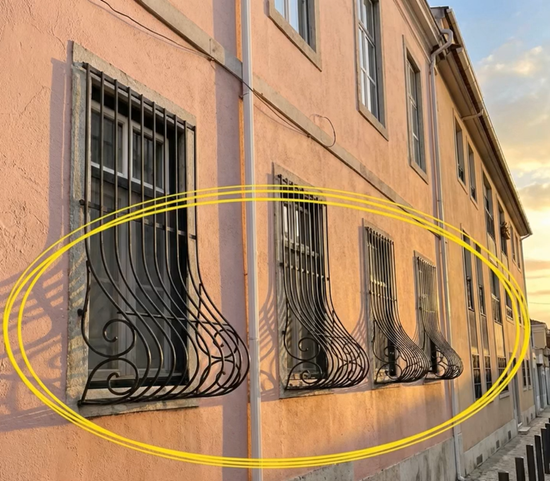
If you’ve ever walked past an older home and noticed window bars that bulge outward near the bottom, you might have paused and wondered: why would anyone design them like that?
At first glance, these outward curves—often called “potbellied” window bars—might appear to be a decorative flourish or even a curious mistake in the metalwork.
Yet, behind this distinctive shape lies a fascinating story of practical design, urban living, and the ways people adapted to make their homes safer while remaining connected to the world outside.
Early Window Bars: From Simple Security to Everyday Use
The history of window bars stretches back centuries. In urban areas, particularly as cities expanded during the 18th and 19th centuries, residents faced growing concerns about safety.
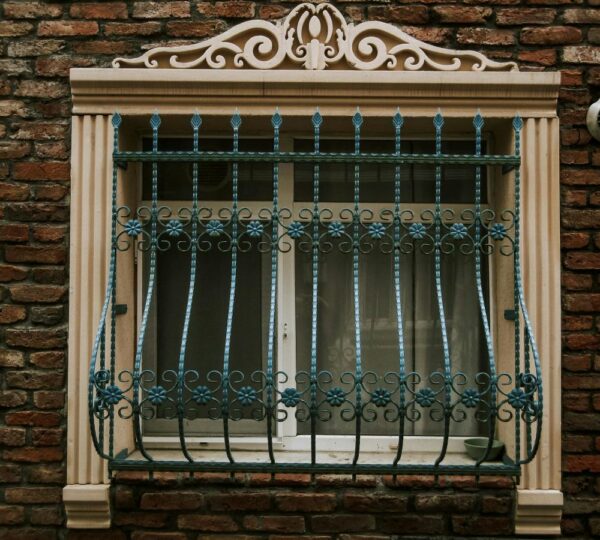
Narrow streets, dense populations, and frequent petty crime made securing the home a priority. Initially, window bars were purely functional: flat, straight metal rods set closely together across the window opening.
These bars were effective at keeping intruders out, but they also created a sense of confinement, cutting off the inside from the outside world.
As the population in city neighborhoods increased, homeowners began seeking ways to combine security with livability. Windows were essential for light, ventilation, and connection to the street, yet standard flat bars made it difficult to open them fully without compromising safety.
Residents started experimenting with shapes and placement, eventually giving rise to the outward-bulging, or potbellied, style that would become both practical and iconic.
Why the Outward Curve? Function Over Form
The outward curve of potbellied window bars was no accident. This design served multiple purposes that straight bars could not. By creating a small pocket of space between the window and the street, these bars allowed homeowners to enjoy fresh air while maintaining a secure barrier.
In neighborhoods where buildings were close together and life happened right outside windows, the extra space provided a buffer zone—allowing residents to look out safely, reach beyond the window, or interact with the street without leaving the home vulnerable.
For example, the bulge made it possible to place flower pots or small plants outside the window without fear of theft. Laundry could be hung in the extra space to dry, catching sunlight and breeze while remaining within the secure boundary.

Parents could lean slightly out of the window to watch children playing in the street or greet neighbors passing by, all while staying inside a protected home. In this way, the outward curve transformed the bars from a mere security feature into an integral part of daily urban life.
Social and Cultural Significance
Beyond practicality, potbellied window bars often became a subtle form of social interaction and personal expression. In many historic neighborhoods, windows functioned as mini “front porches.”
The bulging bars allowed residents to maintain a sense of connection with their community while ensuring safety. People could engage with their environment—catching sunlight, hearing conversations, or observing street life—without stepping outside.
The space created by the curve also gave homeowners a canvas for creativity. Residents could arrange potted plants in decorative patterns, paint the metal to complement the house’s facade, or choose designs that reflected personal taste.
Over time, these small details contributed to the character of the neighborhood, giving each home a unique identity while preserving a uniform sense of security.
In some cultures, particularly in Mediterranean and Latin American regions, outward-bulging window bars became an opportunity for artistic flourish.
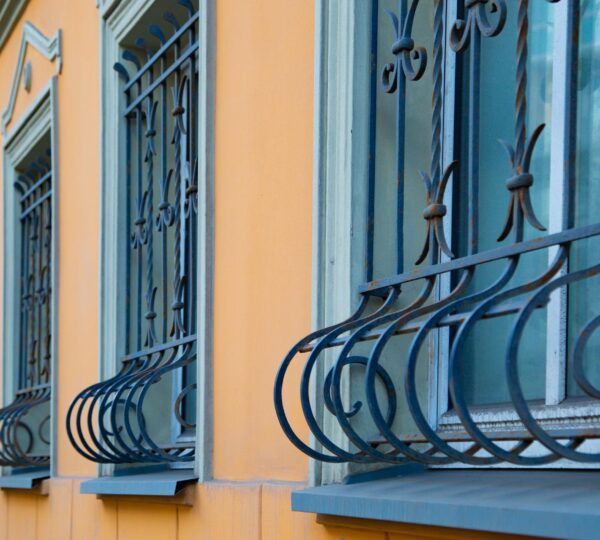
Wrought iron was often bent into intricate patterns: scrolls, curves, and geometric motifs that elevated the bars from functional metalwork to decorative art.
Even in more utilitarian settings, homeowners recognized that beauty and security need not be mutually exclusive.
Architectural Adaptation to Urban Life
The emergence of potbellied window bars illustrates how architecture evolves in response to the demands of urban living.
Dense housing, narrow streets, and limited outdoor space forced designers and residents to innovate. Unlike suburban homes, where gardens and porches provided safe outdoor access, city dwellers relied on windows as an interface with the outside world.
Potbellied bars offered a compromise: a secure home without sacrificing openness and engagement with the street.
This architectural adaptation also highlights the interplay between safety and comfort. Early straight bars solved the problem of intrusion but ignored human needs for light, air, and community interaction.
By contrast, the outward curve acknowledged these needs, demonstrating that even small design changes can have significant effects on quality of life.
Regional Variations and Styles
While the concept of bulging window bars spread widely, its implementation varied depending on location and cultural context. In Europe, particularly in Italy and Spain, ironwork often featured elaborate scrolls and decorative motifs, blending artistry with security.
In Latin American countries, potbellied bars were common in colonial homes, providing protection while allowing residents to maintain close ties to the bustling street life below.
In the United States, older urban districts—such as parts of New York, Boston, and New Orleans—adopted similar designs. In these neighborhoods, tight row houses and crowded streets necessitated windows that could serve multiple functions: ventilation, observation, and safety.
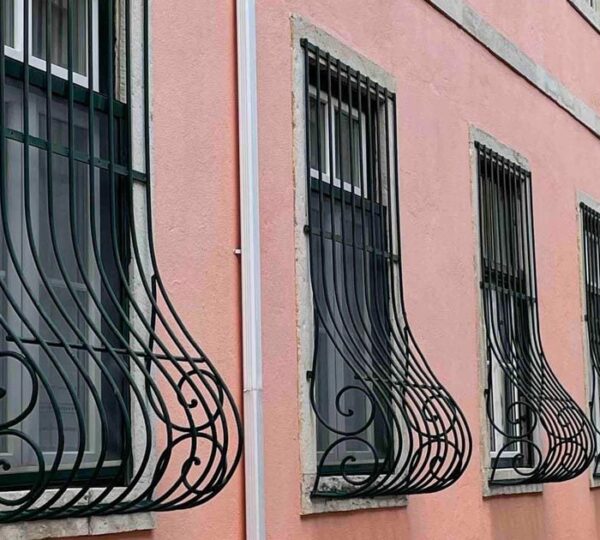
The potbellied style allowed residents to optimize this multifunctional space, and many of these bars remain in historic districts to this day, silently telling the story of practical design married to daily life.
The Legacy of Potbellied Window Bars
Today, potbellied window bars serve as more than just a security feature; they are a window into the social and architectural history of neighborhoods.
Walking past a home with outward-curving bars, one can imagine the lives that unfolded there: children playing below, neighbors chatting, flowers thriving in the sunlit pockets. Each curve, each bend in the iron, represents a thoughtful solution to the challenges of urban living.
Architects and designers continue to draw inspiration from this style, integrating outward-bulging bars into modern homes in ways that honor tradition while meeting contemporary needs.
The principles remain the same: provide security, enhance usability, and maintain a connection between residents and their environment.
Practical Benefits Today
Even in modern buildings, where security technology has advanced, the practical benefits of outward-curving window bars are still relevant. They allow for:
Ventilation: Air can flow freely without compromising safety.
Observation: Residents can observe the street or interact with neighbors while remaining protected.
Outdoor Space: Small items, such as potted plants or decorations, can be placed safely.
Child Safety: Parents can watch children without the risk of accidental falls.
By combining these advantages with aesthetic possibilities, potbellied window bars continue to inspire designs that prioritize both function and human experience.
The Human Story Behind the Design
Ultimately, the enduring appeal of potbellied window bars lies in their human-centered design. They are not merely metal rods; they are expressions of ingenuity, empathy, and adaptation.
Their creation tells a story of homeowners confronting real challenges—crime, cramped spaces, and limited outdoor access—and finding ways to solve them with elegance and practicality.
Through this lens, every outward curve and bulge carries meaning. It reflects the desire to live safely, comfortably, and connected to one’s community.
The bars act as a protective barrier, yes, but also as a subtle invitation to engage with the world beyond the window. They exemplify the idea that good design responds to both material needs and human experience.
Conclusion
Potbellied window bars remind us that even small architectural details can carry deep significance. Far from being merely decorative or accidental, the outward curves of these bars represent centuries of adaptation, problem-solving, and creativity.
They provided security in dense urban environments, facilitated interaction with the street, and allowed residents to make their homes feel open and alive.
From Europe to Latin America to historic U.S. neighborhoods, these bars stand as silent witnesses to the lives of the people who designed, installed, and used them.
They continue to inspire modern architects and homeowners who seek security solutions that feel humane, functional, and connected to daily life.
In the end, potbellied window bars are more than ironwork—they are a testament to the ingenuity of ordinary people finding extraordinary ways to make their homes safer, more livable, and more connected to the world outside.
