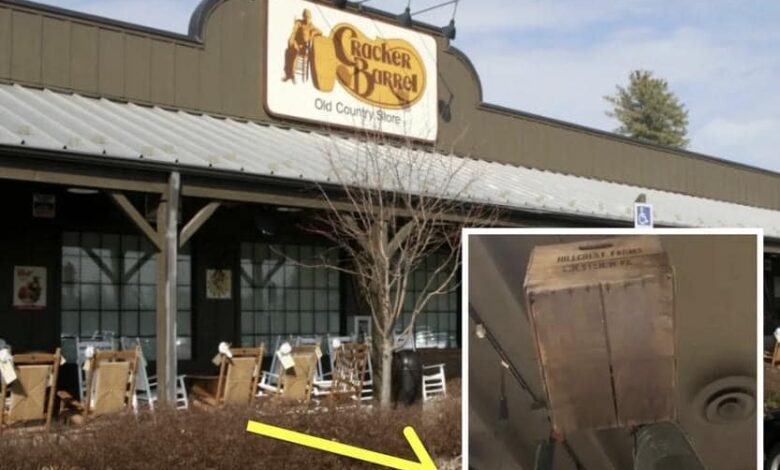
In the realm of American casual dining, few brands are as inextricably linked to a specific aesthetic as Cracker Barrel Old Country Store. For decades, the franchise has curated an atmosphere of rural nostalgia, characterized by rustic porches, crackling fireplaces, and walls adorned with authentic Americana. However, the challenge of maintaining an environment filled with thousands of unique historical artifacts is the potential for those items to be viewed through a contemporary lens that differs from their original intent. This reality was brought to the forefront recently when a Cracker Barrel location in Connecticut became the center of a significant conversation regarding the interpretation of historical decor and the responsibility of public spaces to remain sensitive to cultural symbolism.
The incident began when a discerning guest at the Connecticut restaurant noticed a specific item suspended from the ceiling as part of a vintage tool display. The item in question was an antique soldering iron, a common relic from an era of manual craftsmanship. However, the way the cord of the tool was wrapped and hung created a silhouette that many patrons found deeply troubling. To the casual observer, the configuration bore a striking and unfortunate resemblance to a noose—a symbol of racial violence and intimidation that carries immense historical trauma in the United States. While the item was intended to represent the industrious spirit of the past, its visual presentation evoked a far darker chapter of American history.
Once the concern was raised, the response from Cracker Barrel’s corporate leadership and local management was immediate and unequivocal. Recognizing that the comfort and safety of their guests are paramount, the restaurant issued a sincere apology for any distress the display had caused. The company clarified that there was absolutely no intentional symbolism behind the arrangement of the tool’s cord; it was simply a vintage artifact hung by a decorator who had not anticipated the potential for misinterpretation. Nevertheless, the brand acknowledged that intent does not always mitigate impact. The offending item was promptly removed from the ceiling, effectively neutralizing the immediate concern and signaling to the community that their voices were being heard.
This event triggered a broader dialogue within the community and among the restaurant’s regular patrons. In the days following the removal of the tool, management engaged in open, transparent conversations with local leaders and guests. these interactions provided a valuable opportunity for the company to listen to different perspectives on how historical objects can affect the dining experience. For some, the tool was merely an antique; for others, the shape it formed was a visceral reminder of systemic pain. These discussions highlighted a critical truth for modern businesses: in a diverse and interconnected society, the curation of a public space requires more than just an eye for history—it requires an awareness of how that history intersects with the lived experiences of various cultural backgrounds.
The Connecticut incident prompted a wave of feedback from customers across the country, many of whom encouraged Cracker Barrel to conduct a more rigorous review of the decorative items utilized throughout its hundreds of locations. The company leaned into this feedback, reaffirming its foundational commitment to creating a “home away from home” that is genuinely welcoming and inclusive for every individual who walks through its doors. Leadership emphasized that while the brand’s identity is rooted in the past, its values are firmly situated in the present. This commitment involves a proactive approach to ensuring that every piece of Americana—from the smallest handheld tool to the largest barn sign—is vetted not only for its authenticity but for its appropriateness in a modern social context.
Beyond the immediate crisis management, this situation offers a profound lesson in the importance of thoughtful curation and corporate agility. Public spaces are shared environments, and the items placed within them carry a weight that extends beyond their physical presence. When a business invites the public into a space designed to evoke nostalgia, it must ensure that the nostalgia is universal rather they exclusionary. Cracker Barrel’s decision to act swiftly rather than defensively served to de-escalate what could have become a much more divisive issue. By prioritizing the emotional safety of their guests over the preservation of a specific decor arrangement, they demonstrated a level of corporate empathy that resonates with modern consumers.
As the retail and hospitality industries continue to evolve, the expectation for cultural intelligence has never been higher. Consumers are increasingly mindful of the environments they choose to support, and they expect the brands they patronize to be equally mindful. The resolution of the concerns in Connecticut suggests a path forward for businesses that find themselves at the intersection of tradition and transition. It proves that a company can honor its heritage while remaining flexible enough to adapt to the changing sensitivities of its audience. The key lies in the willingness to apologize, the speed of the corrective action, and the depth of the subsequent engagement with the community.
Cracker Barrel has indicated that it will use this experience as a catalyst for continual improvement. Moving forward, the process for selecting and installing “new” vintage decor will likely involve a more diverse set of perspectives to ensure that no item accidentally communicates a message of exclusion. The goal is to preserve the “Old Country Store” charm while ensuring that the only thing a guest feels when they sit down for a meal is a sense of genuine belonging.
Ultimately, the story of the Connecticut soldering iron is a testament to the power of communication. It began with a guest who had the courage to speak up about something that made them uncomfortable and ended with a corporation that had the wisdom to listen and change. In an era where public discourse can often feel polarized, this interaction serves as a constructive model for how businesses and communities can work together to refine the spaces they share. By removing a single cord, Cracker Barrel strengthened its connection to its values, proving that a commitment to inclusivity is the most important tool in any brand’s collection.
