Blood on the front steps. A security camera torn violently from its mount. An eighty-four-year-old woman gone without explanation. In the quiet foothills of Tucson, the scene outside Nancy Guthrie’s home has transformed from ordinary to ominous, raising fears that deepen with every unanswered question.
What was once a peaceful residence now feels like the aftermath of something deliberate and frightening. Investigators have confirmed the presence of blood near the entrance, though they have not stated publicly whether it belongs to Nancy. The Ring camera that once monitored the front of the house is missing, ripped away with enough force to suggest intention rather than accident. Together, these details point to a moment of intrusion—one that may have unfolded quickly, silently, and with devastating consequences.
Police have said little. No suspects have been named. No motive has been outlined. Even basic confirmations remain withheld, fueling anxiety for a family already stretched to its limits. Each new detail, rather than offering clarity, seems to cast a longer shadow over what may have occurred during that quiet night.
Nancy Guthrie did not vanish in a place known for danger. Her neighborhood is described by neighbors as calm, predictable, the kind of area where routines rarely change and disturbances are immediately noticed. That sense of safety has now been shattered. Residents have replayed their own memories of the night in question, wondering whether a sound went ignored or a movement dismissed too quickly.
Inside the home, life appears to have been interrupted rather than abandoned. This was not someone preparing to leave. This was someone whose night was cut short by something—or someone—unexpected. Investigators believe Nancy was likely taken against her will, though they have not explained how that conclusion was reached or what evidence supports it.
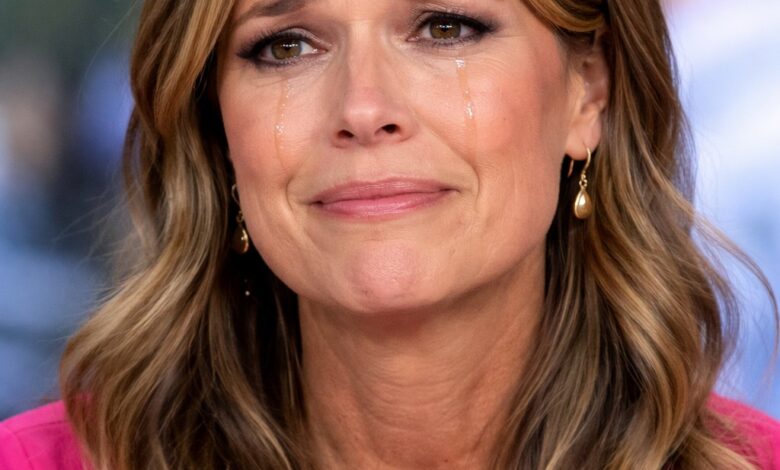
For Savannah Guthrie, the reality is brutally personal. Accustomed to delivering difficult news to millions with composure and clarity, she now finds herself on the opposite side of the story. This time, she is not reporting. She is waiting. Waiting for answers that are slow to come, and bracing herself for possibilities she never imagined having to face.
Those close to the family describe a state of suspended emotion—hope fighting fear, determination pressing against exhaustion. Savannah has stepped back from professional obligations, focusing entirely on her family as they navigate a situation that offers no timeline, no guarantees, and no clear direction forward.
Law enforcement activity around the home has been methodical but guarded. Forensic teams have collected evidence. Samples have been sent for testing. Investigators are mapping timelines, reviewing nearby surveillance footage, and following leads that may or may not lead anywhere. The lack of public information has been intentional, officials say, meant to preserve the integrity of an investigation that is still unfolding.
Still, silence can feel unbearable to those living inside it.
The missing camera has become one of the most disturbing elements of the case. Cameras are meant to record, to deter, to provide clarity after the fact. Removing one suggests someone wanted to erase a record, to control what could be seen later. Whether that effort succeeded remains unknown. Investigators are examining whether footage may have been transmitted or stored elsewhere before the device was destroyed.
The blood outside the door raises even more troubling questions. Was there a struggle? Was Nancy injured? Or does the blood belong to someone else entirely? Until forensic results return, each possibility remains open, and each carries its own weight.
Friends of the family describe Nancy as mentally sharp, independent, and deeply rooted in her routines. She did not wander. She did not leave without telling someone. The idea that she would disappear voluntarily does not align with who she is or how she lived. That understanding makes the physical evidence outside her home all the more chilling.
As investigators continue their work, the emotional toll on the family grows heavier. Waiting becomes a daily discipline. Every ring of the phone brings a surge of adrenaline. Every update from police, however small, is dissected for meaning. And every hour that passes without resolution deepens the ache of not knowing.
Public attention has intensified, drawn not only by the disturbing details of the case but by Savannah’s visibility. With that attention comes both support and pressure. Messages of compassion pour in alongside speculation that the family did not ask for and cannot control. Savannah has been careful to keep the focus where it belongs—on finding her mother, not on feeding rumors.
Investigators have emphasized that they are treating the disappearance as serious and potentially criminal, but have stopped short of using definitive language. That restraint reflects the complexity of the case. Evidence suggests force. Circumstances suggest intent. But without confirmation, authorities remain cautious, aware that premature conclusions can misdirect an investigation.
For the community, the case has altered how safety is perceived. Doors are checked twice. Cameras are reexamined. Familiar streets feel less familiar. The idea that someone could be taken from their own home, quietly and without immediate detection, has unsettled even those far removed from the Guthrie family.
At the center of it all is a daughter waiting for her mother.
Savannah Guthrie’s public strength has not erased private fear. Those close to her say she is holding onto hope with resolve, even as each detail tests that resolve. The absence of answers is its own kind of torment, one that stretches days into weeks and turns every moment into an exercise in endurance.
Police have asked for patience. They have also asked for discretion, urging the public to avoid spreading unverified claims that could interfere with the investigation. Tips are being evaluated carefully. Every lead, no matter how small, is considered.
What happened on that Tucson night remains unclear. What is clear is that something went wrong, and the signs left behind suggest intent rather than chance. A missing camera. Blood on the steps. A home that should have been safe, now marked by uncertainty.
Until answers come, the family remains suspended between hope and dread, clinging to the belief that Nancy is still alive somewhere, still waiting to be found. For Savannah, the wait is both personal and profound—a reminder that even those who tell the world’s stories are not immune from living one they never wanted.
The house stands quiet now, its silence heavier than before. And as investigators work behind the scenes, one truth remains undeniable: a mother is missing, a family is suffering, and the night that changed everything has yet to give up its secrets.
