Bad Bunny has wrapped up the halftime show at Super Bowl LX, and it was exactly what fans expected—bold, colorful, and unapologetically high-energy.
From the first beat, the performance felt designed to make a statement.
A Show Under a Microscope
Given the debate leading up to the game, this halftime show carried more scrutiny than most. Critics had questioned the NFL’s decision to spotlight a Spanish-language global superstar on one of the biggest television stages in the United States.
The conservative group Turning Point USA even organized its own “All-American” alternative event, featuring Kid Rock, in response to what they described as dissatisfaction with the league’s choice.
Some of the backlash also referenced Bad Bunny’s previous decision to cancel U.S. performances amid concerns about possible ICE raids. That history only intensified the conversation about culture, language, and politics surrounding this year’s halftime selection.
Yet despite the noise, the Puerto Rican artist remains one of the most commercially successful and culturally influential performers in the world. He routinely sells out stadiums across continents, dominates streaming charts, and commands a massive, multilingual fan base.
A Performance That Lit Up Santa Clara
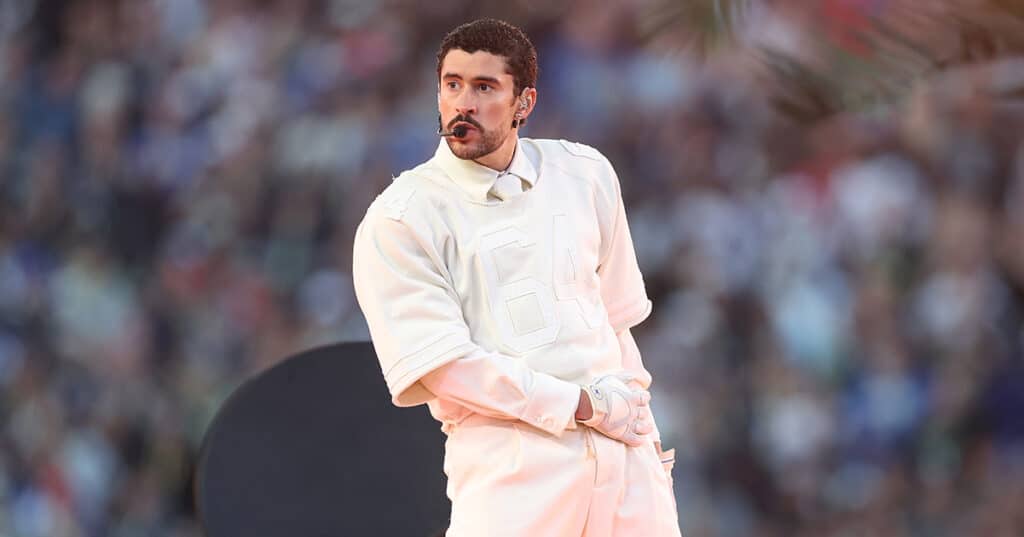
At Levi’s Stadium, Bad Bunny delivered a visually explosive set filled with Latin beats, synchronized choreography, and vibrant stage design. The surprise appearance by Lady Gaga sent the crowd into a frenzy, blending pop spectacle with Latin urban rhythm.
Fireworks erupted, dancers filled the field, and the stadium pulsed with reggaetón and trap influences that have defined Bad Bunny’s rise.
For many viewers, it was a celebration of Latin music’s global reach—a genre that has increasingly dominated international charts over the last decade.
Language Sparks Online Debate
However, as predicted, much of the online commentary focused less on the staging and more on the language.
Because the performance was delivered primarily in Spanish, some viewers expressed frustration on social media.
One user wrote, “Couldn’t understand anything he was saying. Is there going to be a translator on stage with him?”
Another asked whether they should “turn subtitles on in English.”
A third commented that having a halftime show “entirely in Spanish makes no sense,” while others suggested they would have enjoyed it more had they understood the lyrics.
Still, other viewers pointed out that Spanish is spoken by tens of millions of people in the United States and that music has long transcended language barriers. Supporters argued that rhythm, performance, and cultural representation are just as central to a halftime show as lyrical comprehension.
A Cultural Moment, Like It or Not
Super Bowl halftime shows have always doubled as cultural flashpoints. Whether it’s genre choice, political undertones, or performer identity, the spectacle tends to reflect larger national conversations.
This year was no exception.
For detractors, the language choice symbolized discomfort with shifting cultural dynamics. For supporters, it represented visibility and inclusion on one of America’s most prominent stages.
Regardless of perspective, one fact remains clear: Bad Bunny commanded the moment. The production was tight, the guest appearance electrifying, and the global conversation immediate.
Love it or criticize it, the halftime show did exactly what it’s meant to do—capture attention, spark debate, and remind audiences that the Super Bowl is as much about culture as it is about football.
Did you watch it? What stood out most to you—the music, the language debate, or the surprise collaboration?
