The Oversight Deadlock: A Clinical Collision of Narrative and Authority
WASHINGTON — In the high-ceilinged hearing rooms of Capitol Hill, where the dry precision of government usually moves with the steady tick of a clock, a sudden and sharp friction recently set the room ablaze. Representative Adam Schiff transformed a routine oversight hearing into a searing interrogation of Attorney General Pam Bondi, centering on a series of alleged ethical breaches and a controversial “missing” investigation.
The confrontation moved from abstract policy to a visceral, repetitive indictment. Schiff’s strategy was surgical, centering on a single, explosive allegation: that a senior administration official, Tom Homan, reportedly accepted a $50,000 cash bribe—an exchange allegedly caught on an FBI recording.
The “Did He Take the Money?” Litany
The tension inside the chamber reached a breaking point as Schiff stripped his inquiry down to a four-word mantra: “Did he take the money?” He repeated the question with a rhythmic intensity, seeking to force a definitive acknowledgment from the nation’s chief law enforcement officer.
The strategy was designed to create a “pressure test” for the Attorney General. When Bondi noted that the alleged incident occurred prior to her confirmation, Schiff did not retreat. Instead, he pointed to public interviews where the official in question notably declined to deny the cash exchange. The repetition served a forensic purpose, suggesting that in a room built for answers, silence or deferral carries its own weight.
The “Zero Response” Ledger

The hearing reached a second climax when Schiff pivoted from the Homan allegation to a rapid-fire “ledger of refusal.” In a high-speed sequence, he listed over a dozen sensitive inquiries to which he claimed Bondi had provided no substantive answer.
The list spanned the breadth of the Justice Department’s most sensitive files: the reclassification of Epstein documents, the $400 million gift from Qatari interests to the executive branch, and the mass dismissal of career prosecutors involved in January 6th investigations. “You refused to answer,” Schiff repeated after each point, building a narrative not of a single disagreement, but of a structural “blackout” of congressional oversight.
The “Personal Attack” Defense
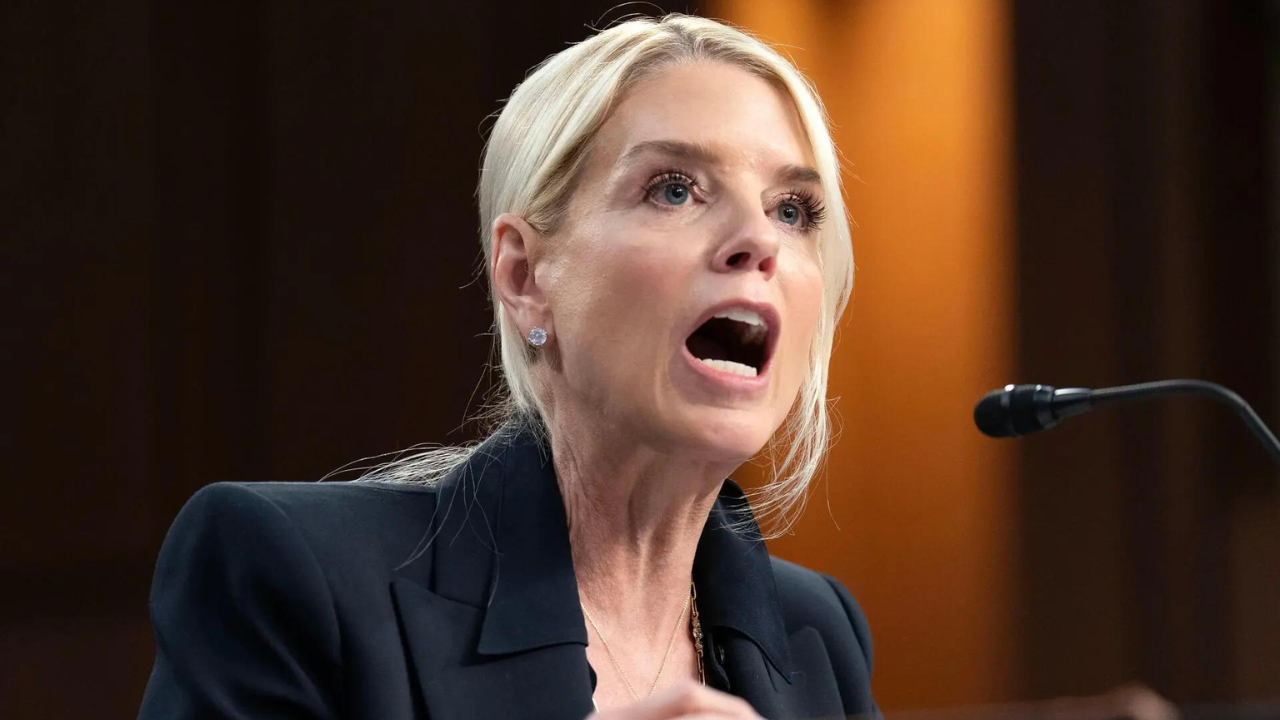
Maintaining a posture of practiced composure, Bondi defended the department’s record by leaning into an offensive strategy. She questioned Schiff’s own credibility, referencing his past censure by Congress and characterizing his line of questioning as “slander.”
“Will you apologize to Donald Trump?” Bondi asked, flipping the script and momentarily stalling the procedural rhythm of the hearing. The exchange highlighted a deepening fracture in the American constitutional balance, where oversight is increasingly reframed as a personal or partisan attack. Bondi’s defense—that she was protecting “good people” from “canned attacks”—was a visceral appeal to her base, even as it left the technical oversight questions unaddressed.
The Forensic Record: A Thousand Alarms
As the exchange spiraled toward chaos, Schiff made what may be his most durable move of the session. He submitted a series of documents into the official congressional record, including a letter from over 1,000 former Justice Department officials warning of “democracy-threatening abuse of power.”
Included in this “expert authority stack” was a letter from Michael Ben-Ary, a career counterterrorism prosecutor, who raised an alarm that the removal of experienced career officials from the FBI and DOJ undermines the nation’s ability to counter malign nation-state actors. By entering these documents without objection, Schiff ensured that the concerns of the “career professionals” are now permanently etched into the record of the Bondi era.
A Verdict on Transparency
As the gavel fell, the hearing yielded no immediate confessions, but it did expose a profound fracture in institutional trust. The “loudest answer” from the hearing was the silence where a recording or a confirmation should have been.
For the American public, the confrontation served as a visceral reminder that the Department of Justice is currently a battlefield of competing realities. Whether the $50,000 allegation is ever fully explained remains to be seen, but the “Citizen Schiff vs. General Bondi” standoff has ensured that the debate over executive accountability will not be quietly “shut down” in the dark. The path forward will determine whether the oversight process still has the teeth to compel the truth, or if it has become a mere geography of rehearsed narratives.
