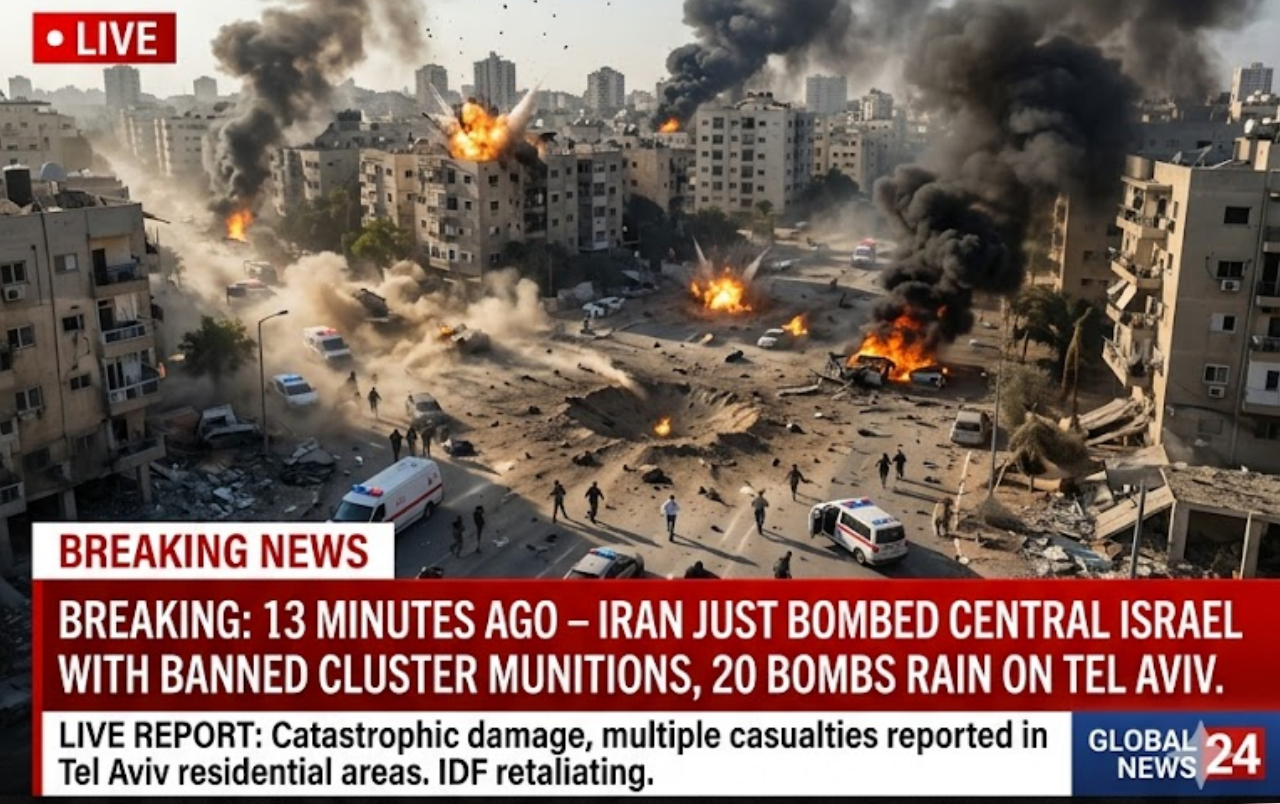
A new wave of violence has shaken central Israel, as reports indicate that Iranian missiles armed with cluster munitions struck areas around Tel Aviv, intensifying fears over the use of highly controversial weapons in densely populated المناطق. The attack, described by witnesses as a “rain of explosions,” has once again highlighted the devastating impact of modern missile warfare on civilian zones.
According to emerging details, the missiles were equipped with cluster warheads—devices designed to disperse multiple smaller explosives, or submunitions, over a wide area. Instead of a single impact, these weapons break apart mid-air, scattering dozens of bomblets across neighborhoods, streets, and infrastructure. Analysts say this makes them significantly harder to intercept and far more dangerous to civilians on the ground. ()
Reports from the ground suggest that roughly 20 submunitions fell across parts of the Tel Aviv metropolitan area, causing multiple explosions within seconds. This pattern is consistent with previous incidents where Iranian missiles released payloads over several kilometers, saturating defensive systems and increasing the likelihood of impact. ()
Cluster munitions fall over Tel Aviv as Iran seek retaliation
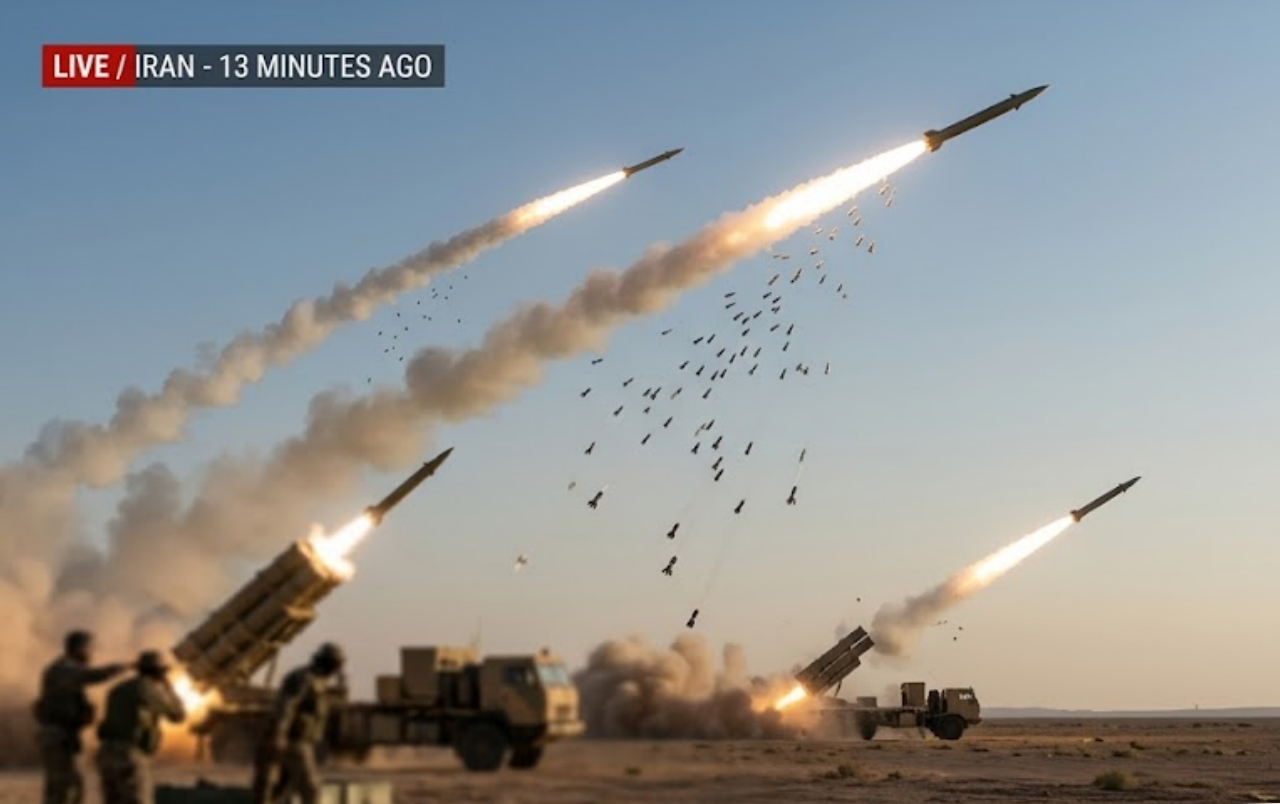
Eyewitness accounts describe scenes of chaos, with sirens blaring as civilians rushed to shelters. In some areas, explosions shattered windows, damaged vehicles, and left debris scattered across streets. Emergency services were deployed rapidly, responding to injuries caused not only by the initial blasts but also by shrapnel from multiple simultaneous detonations.
Cluster munitions are widely condemned under international humanitarian law due to their indiscriminate nature. Human rights organizations have repeatedly warned that such weapons pose long-term risks, as many submunitions fail to explode immediately and remain on the ground as hidden hazards—effectively acting like landmines. ()
This is not the first time such weapons have been reported in the current conflict. Investigations have documented multiple instances of cluster munitions being used in and around central Israel, including near Tel Aviv, with civilian casualties recorded in previous strikes. () Meanwhile, recent footage and reports also suggest that at least some of these weapons have penetrated Israel’s air defense systems, raising concerns about interception limits under saturation attacks. ()
The strategic implications are significant. By using cluster warheads, attackers can overwhelm missile defenses by turning one incoming missile into dozens of threats mid-air. This complicates interception and increases the chances that at least some explosives will reach the ground.
International reaction has been swift, with renewed calls for restraint and adherence to the laws of war. The use of such weapons in populated areas is widely regarded as a serious escalation, potentially crossing legal and ethical boundaries.
As tensions continue to rise, the latest strike underscores a grim reality: modern conflicts are increasingly defined not just by precision, but by the devastating spread of weapons that can impact entire നഗര districts in seconds. For civilians in Tel Aviv, the threat is no longer a single explosion—but many, falling all at once from the sky.
