The Volume of Silence: A Forensic Clash Over the Epstein Archives
WASHINGTON — In the high-stakes theater of the House Judiciary Committee, where the dry precision of government usually moves with the steady tick of a clock, a sudden and sharp friction recently set the room ablaze. Representative Jared Moskowitz transformed a routine oversight hearing into a searing interrogation of the nation’s chief law enforcement officer, Attorney General Pam Bondi, over the Department of Justice’s (DOJ) handling of the Jeffrey Epstein investigative records.
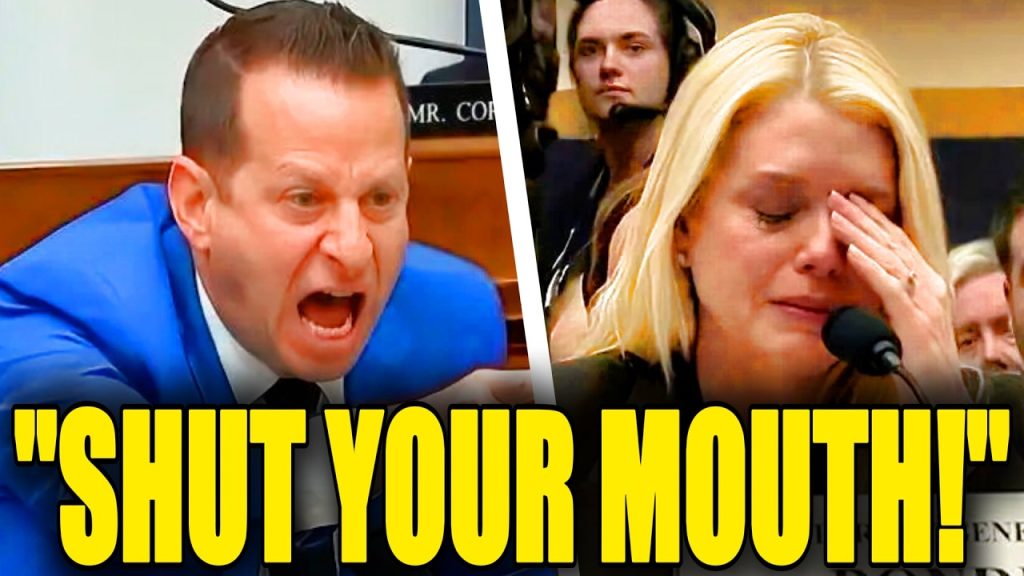
The confrontation moved from abstract policy to forensic shock when Moskowitz challenged the administration’s claim of “pure transparency.” The exchange was punctuated by the revelation of a physical briefing binder—referred to by Moskowitz as a “burn book”—which allegedly contained researched “opposition” data on the very lawmakers tasked with overseeing the department.
The Metric of Presence
The tension inside the chamber reached a breaking point when Moskowitz introduced a set of provocative metrics to dismantle the claim that Donald Trump’s name appears “insignificantly” in the Epstein files. While previous testimony suggested the President’s name appears fewer than 100 times, Moskowitz provided a different forensic comparison.
He stated for the record that Trump’s name appears more times in the Epstein files than the word “God” appears in the Bible, or the name “Harry Potter” appears in the entire seven-book series. “You do not appear in a criminal file more times than a main character appears in their own book unless you are central to the narrative of that file,” Moskowitz argued, leaning into the microphone.
The Redaction Paradox
The hearing highlighted a troubling “redaction paradox” regarding the millions of pages of documents released to date. Moskowitz pointed to testimony from Ghislaine Maxwell regarding 29 Epstein associates who reportedly cut “secret deals” with the DOJ. He argued that a list of six key names remains readily available—if only the department would choose to unredact them.
The DOJ’s choice to hide the identities of potential co-conspirators while the public remains in the dark was characterized by critics as a “political protection racket.” Moskowitz further highlighted documents that allegedly dispute the President’s long-standing claim that he had “kicked Epstein out” of his private club, citing conflicting statements from the club’s former management.

The “Burn Book” and the Power of Intimidation
The climax of the session arrived when Moskowitz asked the Attorney General to flip to the “Jared Moskowitz section” of her binder. By bringing researched data on a sitting Congressman to an oversight hearing, Bondi was accused of signaling that the DOJ views constitutional oversight as a personal attack.
Moskowitz described the binder as a “burn book”—a tool designed to silence dissent through the implicit threat of using federal resources to find “dirt” on political critics. This display of power, critics argue, represents a fundamental breach of the separation of powers, where the executive branch “watches the watchers” to stifle inquiry.
The Bannon-Epstein Connection
The controversy has been further fueled by the release of a final tranche of 3 million files, which reportedly revealed “deeper, chummier” ties between Epstein and prominent Trump allies. Included in these files are two hours of never-before-seen interview footage of Epstein conducted by Steve Bannon.
In the footage, Epstein is seen discussing his first stint in jail in 2008, remarkably describing the experience as “funny” and “incredible.” The existence of over 15 hours of such footage, intended to “rehabilitate” Epstein’s reputation, adds a new layer of complexity to the investigation into the billionaire’s social and political network.
A Verdict on Compliance
As the gavel fell, the hearing yielded no immediate confessions, but it did expose a profound fracture in the American constitutional balance. Democratic Congresswoman Melanie Stansbury, a member of the House Oversight Committee, later confirmed that the DOJ remains non-compliant with standing subpoenas, intentionally withholding work product that implicates potential co-conspirators.
For the survivors of the Epstein network, the spectacle offered a harrowing look at an institution they feel has abandoned its core mission. As the battle moves from the committee room toward potential contempt proceedings, the American public is left to wonder: Is the truth finally coming into the light, or is the shadow of the Epstein network still long enough to influence the highest levels of American justice?
