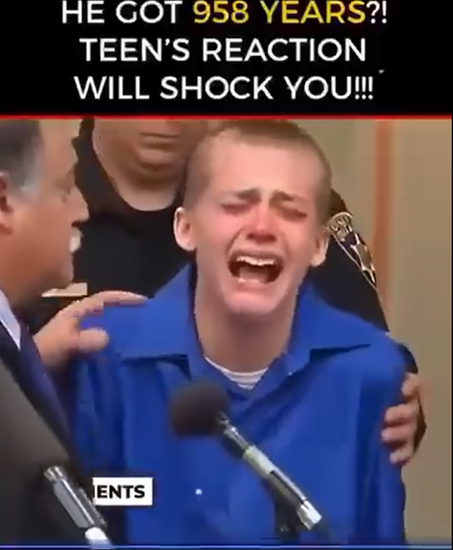
In a courtroom, few moments are as stark and unsettling as hearing a sentence that stretches far beyond a human lifespan.
Across the United States and around the world, some criminal cases result in sentences measured not in decades, but in centuries — symbolic measures of society’s judgment.
Yet deeply controversial in how they intersect with justice, rehabilitation and human rights. It’s true that courts have, on occasion, imposed sentences totaling hundreds or even thousands of years.
But these sentences are almost always handed down in adult cases involving multiple severe crimes, and they function legally as a way to ensure that the defendant will spend the rest of their life in prison.
They are not literal expectations that an individual will live multiple lifetimes, but they guarantee no opportunity for early release under normal sentencing structures.
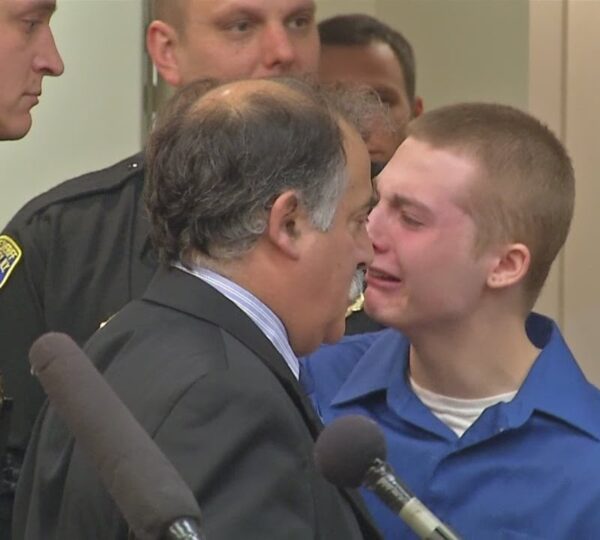
A clear example comes from Sonoma County, California, where two adult cousins were sentenced to a combined 985 years in state prison after a jury found them guilty on dozens of counts of child sexual abuse over many years.
One received 500 years and the other 485 years to life — effectively life sentences under California law. The judge described the crimes as among the most terrible he had encountered, and prosecutors noted that without such sentencing the scope of harm to multiple victims would not be fully represented by a single term.
Sentences like this serve several purposes in criminal law:
Reflecting the severity and multiplicity of offenses: When an individual is convicted of numerous distinct crimes — especially violent ones — judges may assign consecutive sentences so each conviction carries its own punishment.
Ensuring incapacitation: By stacking penalties, courts can make sure that the defendant is not eligible for release even if one charge is overturned on appeal.
Symbolizing societal condemnation: Century‑long sentences express moral judgment and legal condemnation for egregious conduct.
But these principles apply most straightforwardly to adult defendants. The question becomes far more complicated when a defendant is a juvenile.
Juvenile Justice: A Separate System, But Not Always
Across the United States, the juvenile justice system traditionally operated separately from the adult system, emphasizing rehabilitation over punishment for offenders under 18.
However, for particularly serious crimes — such as violent felonies or murders — prosecutors may seek to transfer juvenile defendants into adult court. If that occurs, they become eligible for adult penalties.
Still, even in adult court, there are limits on how juveniles can be sentenced:
The U.S. Supreme Court has ruled that mandatory life sentences without parole for juveniles violate the Eighth Amendment’s prohibition on cruel and unusual punishment (in cases like Miller v. Alabama and Jackson v. Hobbs), though judges may still impose life sentences after individual consideration of circumstances.
Some states have enacted laws specifically limiting how harshly juveniles can be punished, or requiring review after a certain number of years.
For example, Illinois passed legislation that abolished life without parole for most offenders under 21 at the time of their crimes — although the change does not apply retroactively to those already sentenced under earlier law.
Real Cases of Severe Juvenile Sentencing
There are documented real cases of youth being sentenced to extremely long terms because they were tried as adults — even though nowhere near 985 years:
Oxford High School Shooting, Michigan
In December 2023, a judge in Michigan sentenced 15‑year‑old Ethan Crumbley to life imprisonment without parole for the 2021 school shooting that killed four students and wounded several others. Prosecutors argued the crime amounted to terrorism based on the terror it inflicted on the school community.
This was one of the rare occasions where a juvenile received a life sentence without parole — a decision upheld after a hearing allowing the judge to consider the individual circumstances under state law.

Other Juvenile Cases with Long Sentences
Media reporting and court decisions also show a range of other severe but more typical sentences for juveniles tried as adults, such as decades behind bars for violent crimes, although not centuries:
Teens convicted of murder in various states receiving decades‑long sentences or life with lengthy minimum terms.
Cases internationally — like an 18‑year‑old in the U.K. sentenced to 52 years for a stabbing attack recognized as exceptionally serious.
These cases underscore that while juveniles can face severe penalties when tried as adults, sentencing structures in most jurisdictions do not typically produce implausibly lengthy terms like hundreds of years — especially not for minors.
Understanding the Debate: Punishment vs. Rehabilitation
An extreme sentence raises fundamental questions about the purpose of punishment. Legal scholars, psychologists and human rights advocates differ widely:
Arguments for Severe Sentencing
Supporters of long prison terms often argue:
Public safety: Removing dangerous individuals from society prevents future harm.
Accountability: Severe penalties reflect the gravity of crimes and convey that society will not tolerate heinous conduct.
Deterrence: Harsh sentencing may discourage others from committing similar offenses.
This perspective often resonates strongly with victims and their families, who view justice in part as proportional retribution for harm suffered.
Arguments for Limiting Harsh Penalties
Opponents of extreme sentences — especially for young offenders — point to:
Neurological research: Adolescents’ brains are still developing, particularly in areas related to impulse control and long‑term judgment.
Capacity for change: Many juveniles, even those who commit serious crimes, have potential for rehabilitation and transformation over time.
Human rights concerns: Life without parole or excessively long sentences remove any hope for eventual reintegration into society.
Systemic inequalities: Data shows that minorities are disproportionately affected by severe sentencing policies.
Public Reaction and Broader Discourse
When sensational sentences make headlines, public reactions are often polarized:
Some members of the community express relief that justice was served and feel safer knowing a dangerous individual will remain incarcerated. Victim impact statements and community perspectives frequently emphasize closure and public protection.
Others caution that punishing youth too harshly may extinguish any chance for rehabilitation or personal growth, and that society must grapple with how to serve justice and foster possibilities for redemption.
Online debates, social media discourse, and editorial commentary frequently reflect these divergent views, illustrating how criminal sentencing often becomes a proxy for deeper philosophical and political disagreements about the role of punishment in society.
What Hundreds of Years Really Mean in Sentencing
When judges impose extraordinarily long sentences — hundreds of years or more — these are often symbolic and technical constructions rather than literal expectations. They generally reflect:
Consecutive Sentencing: If a defendant is convicted on multiple counts (for example, multiple assaults, robberies, and sex crimes), sentences on each count may be ordered to run one after another, producing a large total number.
No Parole Eligibility: Long totals ensure the defendant won’t become eligible for release under normal circumstances, even if appeals overturn parts of the conviction.
Judicial Discretion: Judges use sentencing guidelines, statutory requirements, and discretion to impose penalties that align with legal frameworks and community expectations.
The Tension Between Law and Humanity
Extreme sentencing invites reflection on several enduring questions:
Can a legal system designed to punish also foster rehabilitation? In many countries, juvenile justice policies attempt to balance accountability with opportunities for reform.
Is it just to extinguish hope for release in a child, even one who committed awful crimes? Modern legal practice typically recognizes that youth are qualitatively different from adults in decision‑making and growth potential.
Does symbolic sentencing serve justice, or does it merely satisfy emotional demands for retribution? The utility of extremely long terms continues to be debated among judges, lawmakers, researchers, and the public at large.
Conclusion: Grappling With Justice, Humanity, and the Law
The question of how society should respond to extreme criminal behavior — especially when juveniles are involved — does not have easy answers.
While cases of extraordinarily long sentences do occur in adult contexts and reflect the severity of multiple offenses, the idea of a teenager receiving a 985‑year sentence is not a verified real event and would itself raise profound legal and ethical concerns.
Real cases of long or life sentences for minors are rare, and when they do happen, they usually spark careful legal scrutiny and public debate.
These debates are vital to a functioning justice system, as they force communities to grapple with complex issues about punishment, the nature of human development, and the balance between public safety and hope for rehabilitation.
Ultimately, a just legal system must strive to protect communities, hold offenders accountable, and respect the potential for human change — especially in young people whose lives and choices are still unfolding.
