The Shadow of the Gavel: A Senate Confrontation Over Blackmail and Bureaucracy
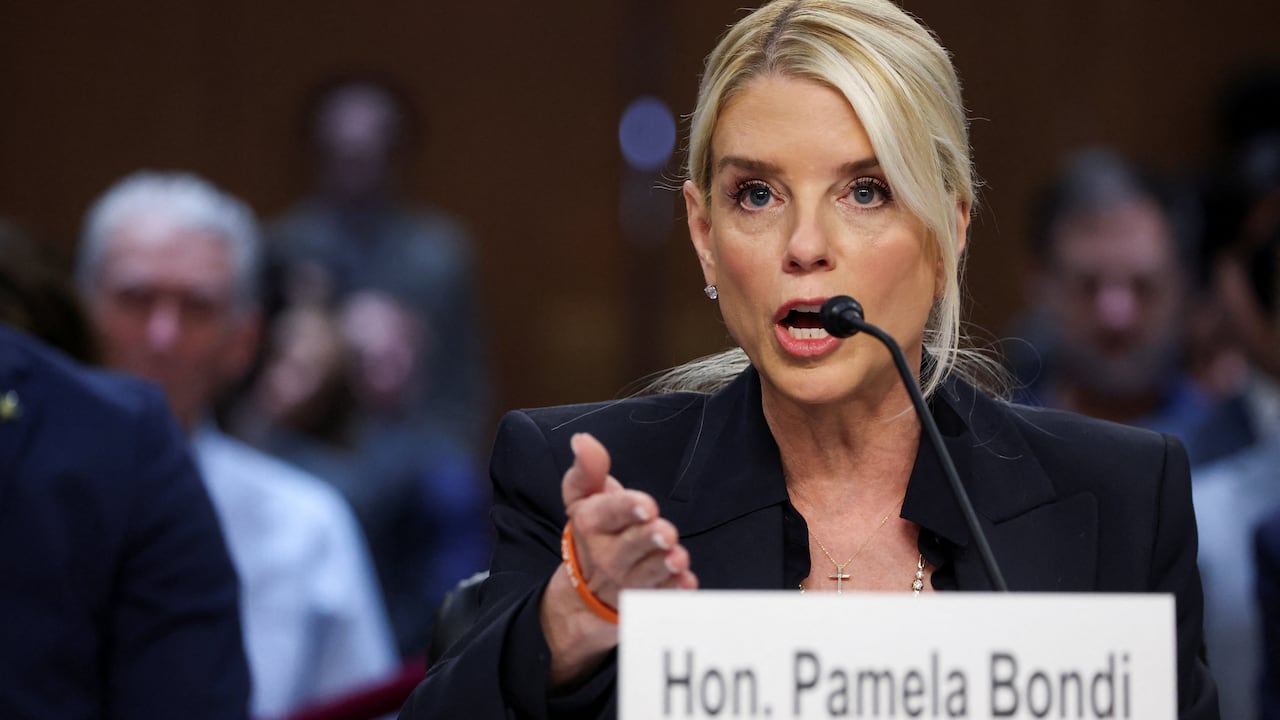
WASHINGTON — In the cavernous, wood-paneled chambers of the Senate Judiciary Committee, where the dry precision of government usually moves with the steady tick of a clock, a sudden and sharp friction set the room ablaze. On Tuesday, Senator John Kennedy of Louisiana transformed a routine oversight hearing into a searing interrogation of the nation’s chief law enforcement officer, Attorney General Pam Bondi, over what he described as a “disturbing lack of curiosity” in the Jeffrey Epstein investigation.
The confrontation moved from abstract policy to forensic detail when Kennedy focused on a singular, explosive allegation: that Epstein was not merely a predator, but the architect of an industrial-scale blackmail operation designed to compromise the global elite.
The “Greatest Blackmailer” Theory
The tension inside the chamber reached a boiling point when Kennedy cited a recent interview with Commerce Secretary Howard Lutnik. Lutnik, a former neighbor of Epstein, characterized the disgraced financier as the “greatest blackmailer ever,” alleging that Epstein’s residences were essentially recording studios designed to trap influential men in compromising situations.
“Lutnik said they didn’t just see it and ignore it—they participated,” Kennedy noted, leaning into the microphone. He pressed Bondi on whether the Department of Justice had interviewed Lutnik following these public revelations. The room grew noticeably quiet when Bondi confirmed that no such interview had taken place. From Kennedy’s perspective, the department’s passive stance—waiting for a lead to “walk through the door” rather than aggressively pursuing it—represented a dereliction of duty in a case that has haunted the American justice system for decades.
The Subpoena Standoff
The inquiry then pivoted into the digital realm, as Kennedy raised a “hypothetical” that felt uncomfortably specific. He questioned the Attorney General about the legal protocols surrounding the seizure of phone records belonging to sitting United States senators.
Kennedy walked the committee through a step-by-step analysis of how a telecommunications company’s general counsel would respond to such a subpoena, suggesting that any reasonable legal officer would file a motion to quash such an “invasive” request. The senator then suggested that federal investigators had already obtained records for at least eight sitting senators through administrative subpoenas. When pressed to confirm the existence of these applications, Bondi retreated behind a wall of institutional silence, repeatedly stating she could not discuss “pending investigations.”
A Crisis of Civil Liability
The legal sparring underscored a deeper concern regarding the separation of powers. Kennedy argued that if phone companies like AT&T handed over sensitive legislative communications without a fight, they could be facing a “bad rash” of civil liability. He questioned whether the Federal Bureau of Investigation or the Special Counsel’s office had acted with the necessary legal “testicles” to protect constitutional boundaries.
Bondi, maintaining a posture of practiced caution, insisted that the department follows established legal standards. However, the refusal to confirm or deny the targeting of elected officials created a palpable sense of unease among the lawmakers on the dais. For Kennedy, the pattern was clear: a Department of Justice that is cautious when investigating billionaires but aggressive when monitoring its own overseers.
The Redaction Paradox
Beyond the subpoenas and the blackmail allegations, the hearing touched upon the ongoing struggle over the Epstein archives. While the Justice Department has released millions of pages of documents, critics argue that the most pertinent information remains buried under a sea of redactions.
Survivors of Epstein’s network, who sat in a quiet row in the gallery, served as a visceral reminder of the human cost of the delay. Lawmakers pointed out that every document release seems to trigger more questions than it answers, fueling the suspicion that the “whole truth” is still being withheld to protect powerful individuals. Bondi defended the department’s work by citing an “exhaustive review” over three administrations, but for many in the room, the absence of new arrests since the document releases speaks louder than the volume of pages produced.
A Verdict Left to the Public
As the gavel fell, the hearing yielded no confessions, but it did expose a profound fracture in institutional trust. Kennedy’s interrogation suggested that the Epstein saga is not a closed chapter, but a burgeoning constitutional crisis.
The questions that echoed through the room—about secret massage room recordings, monitored phone logs, and unpursued leads—remain unresolved. In the vacuum of those answers, the loud, competing narratives of Washington continue to fill the space. As the struggle moves from the committee room to the federal courthouse, the American public is left to wonder if the truth is finally coming into the light, or if the “shadow that refuses to disappear” has simply grown longer.
